Compromise

It has been tough times for people who compromise.

For many people it seems much easier and simpler just to pick a side/opinion/belief and stick with it, come hell or high water. “Just do it.” “My way, or the highway.” “Get ‘er done.” “Damn the torpedoes, full speed ahead.”

As I watch my two grandsons grow I am reminded how, at some point pretty early on, we all come up against the dreaded “No” word. “No” is often followed by a different option such as, “But you can play with that toy after dinner.”

While at first children probably feel that they are being held back or “lose” in such an encounter, we all soon learn that it is not always bad to do what your momma tells you. You do, after all, get to “play” after dinner just as she promised. Although unbeknownst to us at the time, we are learning to compromise. “Give a little, take a little.” “Go along to get along.” “Trade.” “Share.”

Life gets complicated quickly, however, and very soon most children learn how to tweak the system to get what they want. Kids learn how to negotiate once they find their parent’s “pressure points.” Parents find themselves bending the rules once they find that enforcing them is not always worth the effort.

Similar patterns emerge with friends, partners, and bosses. One way or another we all have to compromise to succeed.

Often the word collaborate is used to denote positive actions that are done in coordination with another party for mutual benefit. The idea here being that these transactions don’t really involve “giving up” anything, but rather just aligning efforts efficiently and effectively. Even in these cases, however, there is still an element of compromise, even if it is nothing more than having to share the limelight with someone else when the project/effort is successful.

One way or another we always have to compromise in some way if we want to be successful.

Some might argue that this does not apply to tyrants, bullies, or crime bosses who wield all the power. They don’t have to compromise.

And it is true that sometimes you can get your way without compromising. If you are in a position of power over the other party you can get away with using a version of the old mafia methodology: “Here’s the deal, you do as I say and I won’t kill you. OK?”

But for every action there is an opposite and equal reaction. As in physics, this holds true for social interactions as well. Push people hard enough and they will either break or they will explode. Even if you get the other person to “break” right now, they will eventually react. As the saying goes, “What goes around, comes around.” Even if the reckoning does not come until Judgment Day, every dog has his day. Or, as we used to say in the Marines, “Payback is a Mother F****r.”

In the long run, forcing your will on others is neither as effective nor as enduring as negotiating a fair compromise.

Deals vs. Compromises

Some people describe a “Good Deal” as a win/lose transaction where one party (you in this case) gets the upper hand. A “Good deal” that is not “good” for the both party’s is not a compromise. As such, it is not as permanent. The “Deal” lasts only until such time as the losing party gains enough power to reverse it.

In writing this post I pulled up the word “compromise” on my handy on-line Webster’s dictionary and found that the word implies that a “mutual promise” has been made by the parties involved.

Compromise by definition means both sides gave up something of value that the other party wanted.

Compromises also include promises on both sides. These promises, and the resulting mutual benefits for both sides, make compromises last.

The word “promise” is especially important here. A promise includes not only a commitment to uphold your end of the bargain, but also shows that you have shared ownership in the decision. You have a dog in the fight so to speak.

Contrast compromise with seemingly more powerful words such as edict, commandment, or executive order. At first blush these “take charge” actions seem to be much stronger than “compromise.” But are they as effective long term?

I submit that these more dominant approaches, basically imposing your will, ultimately fail to deliver positive outcomes. They do, however, deliver on negative outcomes.

Compromises will fail if not kept on both sides. We see the results of broken promises all around us: divorces, bankruptcies, and civil and criminal legal actions of all kinds.

Learning how to compromise is a skill worth having.

Personal Life Balance

In our personal lives we not only need to deal with our loved ones, we also need to “compromise” with ourselves. Time spent at work is time not spent with the family. Time spent with family instead of at work can result in less money to spend. We “promise” ourselves that we will exercise, save money, eat right, and at the same time commit to taking it easy. We accept lower levels of professional performance in order to have better personal relationships. We have to compromise to thrive, and sometimes just to survive.

Note: Sometimes people talk about not wanting to compromise their values. For purposes of this post I am not considering that definition of the word. Discussion of “Values” can take us in a whole other direction. For my thoughts on Values I have included the link to my previous post on that subject below.

During his keynote graduation speech at his alma mater, The University of Western Australia, comedian/entertainer Tim Minchin presented nine lessons for life. His first lesson was “You Don’t Have to Have a Dream. Minchin provides the following alternative to following your passion or life long goals:

“Americans on talent shows always talk about their dreams. Fine, if you have something that you’ve always dreamed of, like, in your heart, go for it! After all, it’s something to do with your time… chasing a dream. And if it’s a big enough one, it’ll take you most of your life to achieve, so by the time you get to it and are staring into the abyss of the meaninglessness of your achievement, you’ll be almost dead so it won’t matter.
I never really had one of these big dreams. And so I advocate passionate dedication to the pursuit of short-term goals. Be micro-ambitious.
Put your head down and work with pride on whatever is in front of you… you never know where you might end up. Just be aware that the next worthy pursuit will probably appear in your periphery. Which is why you should be careful of long-term dreams. If you focus too far in front of you, you won’t see the shiny thing out the corner of your eye.”

I share with Minchin his skepticism of dedicating everything to one’s “dreams” or “passion.” It is especially troublesome when I hear people using the phrase, “I’m not going to just settle.” The word “settle” being spoken with a great deal of distain so as to imply weakness or lack of dedication.

“How could anyone “settle” for anything less than the very best?”

And yet, I drive a 14-year-old mini-van with 175,000 miles on it with a big scrape on the right side. I have learned to compromise with myself.

Political Compromise

The current tragedy unfolding on our southern border has resulted in the U.S. Government forcibly separating young children from their parents. This is an example of the consequences of our political leaders not being willing to compromise.

As I pointed out previously in my 2017 Post titled “Immigration”(Link below) the long-term solution is sound immigration law. In that post I asked my two Democratic Senators in Washington State, Maria Cantwell and Patty Murray, to work across the aisle with Republican Senators. Four Republicans wrote/sponsored the bi-partisan legislation titled The Border Security, Economic Opportunity, and Immigration Modernization Act of 2013. This law ensured border security, protected the jobs of US citizens, and provided a fair way to deal with people who have worked hard and contributed much to our country even though they are here illegally. Under this law violators would be punished, but in an appropriate manner. This compromise legislation passed the Senate 68-32 but then died in the House, where members were not willing to compromise. This left us with antiquated piece-meal laws that do not address the current situation nor do they meet our needs. Since then neither house has passed any legislation that helps resolve the problem.

Immigration should not be managed solely by executive orders issued by the executive branch. Without a workable public law in place, this has been the case in both the Obama and Trump administrations. Congress needs to compromise to solve this problem and come up with new permanent legislation that makes sense. As I recommended to Senators Cantwell and Murray, The Border Security, Economic Opportunity, and Immigration Modernization Act of 2013 would be an excellent place to start.

However, so far our elected leaders have been unwilling to compromise.

Republicans, even with a majority in both houses cannot come up with legislation. Democrats have been unwilling to cross party lines and compromise with moderate Republicans.

Compromise is seen as weakness. Both sides see immigration reform (and many other issues) as a Win/Lose situation when they should be looking for a Win/Win.”

In the meantime, nothing gets resolved.

Trump uses executive power the way he wants to, but without bi-partisan permanent legislation and resolution of the issues (i.e. a compromise), the next president could just as easily reverse all of the Trump decisions. Without bi-partisan compromise we will be in an endless loop. Permanent sensible solutions will continue to evade us.

We need for Congress to compromise.

Geo-Political Compromises

Many have criticized President Trump for compromising with Kim Jong Un, the tyrannical Korean dictator who has murdered thousands of his own people, including his own uncle. I too am somewhat jaded and skeptical about being able to compromise with such a man, but it is way too early to tell if the recent compromise that Trump is attempting with Kim was a good thing or not.

As in our personal lives, the success of a compromise of this magnitude is dependent on both sides living up to the promises that are implicit in the compromise. So far the real negotiations have not taken place leaving us with very little understanding of what those “promises” are. All that being said, I do think that in this case Trump deserves credit for being willing to compromise.

A positive historical judgment on the success of Trump’s compromise will be dependent on Kim keeping his promise and destroying his nuclear weapons. If Kim does this, Trump will have a great achievement. If not, well…

So go ahead, Compromise, and feel good about it.

FYI:

Link to Immigration Post Referenced Above: http://03cf8fa.netsolhost.com/WordPress/2017/03/19/immigration/

Link to Values Post Referenced Above:
http://03cf8fa.netsolhost.com/WordPress/2016/03/12/values/

Apocalypse

“We’re all going to die!!!”

“We’re all going to die.”

One of these two statements is always true.  This post is about the other one.  The one with the exclamation points, the warning and recognition of some impending doom.

Timing is everything.  The Sun will eventually go dark but no one is stocking up on blankets and candles in preparation.

On the other hand, as I write this post, the Kilauea volcano is burping toxic gasses and creeping with hot lava than cannot be stopped by any of man’s most powerful remedies.  The only reasonable step is to haul ass, and soon.

It seems like we are inundated with potential apocalyptic scenarios: Asteroids, bacterial or viral epidemics, earthquakes, tornadoes, hurricanes, floods, lahar mud flows, or lightning strikes, not to mention swarms of killer bees.

Oh yeah, I almost forgot about the terrible things that evil people might do to us.

This includes actions along a sliding scale ranging from bullying up to robbery, assault, rape, slavery, torture, genocide, and nuclear annihilation.

Depending on which cable news channel you watch or which FACEBOOK meme you read, the Mara Salvatrucha international crime gang (aka MI 13) is likely going to murder me in my sleep or I’ll be fried by one of Kim Jong Un’s nukes from fired from North Korea or perhaps one of Ayatollah Khamenei’s fired from Iran.

Fortunately much of the fear mongering we are exposed to is total poppycock.

In my previous post titled Truth I discussed how I try to sift through the mountain of information we are exposed to.

However, some, perhaps many, of these potential calamities are real. So even if I am able to accurately identify the most present dangers, which is no small task, I still am stuck with the dilemma: What am I going to do about it?  What can I do about it?

The first time that I recall facing possible impending doom was during the Cuban Missile Crisis in 1962. The Russians had started assembling nuclear missiles in Cuba within close range of the US. I remember being at Jimmy Breakell’s house along with maybe a half-dozen guys from our 10th grade Swarthmore HS class.  We were openly discussing the possibility of nuclear annihilation.  It all seemed very possible and imminent.

The seriousness in the group was in stark contrast to the more common discussions we had as teenage boys of that era: sports (The NY Yankees with Yogi Berra, Whitey Ford and Mickey Mantle had just beaten the San Francisco Giants with Orlando Cepeda, Juan Marichal, Willie Mays, and Willie McCovey in a dramatic 7-game series which ended with the Giants being down 1 run in the bottom of the ninth with two outs and two runners on base hitting a line drive to the Yankees second baseman thus ending the game);  rock and roll (“Sherry” by the Four Seasons was # 1 on the Billboard Charts – The Beatles were unknown in the US until the following year); cars (think Chevrolet Monza Spyder, Pontiac Gran Prix or of course, Corvette), and girls (discretion calls for no names being used here).

In 13 days in October of 1962 innocence was lost.

The terms catastrophe and apocalyse are usually reserved for mass events that impact hundreds, if not thousands, of people. Whether thousands or just one person is involved, the consequences are pretty much the same: Injured is injured, sick is sick, and dead is dead. Webster’s Dictionary aside, it is a catastrophe when it happens to me.

At this point you might be thinking: “Yikes, there are just too many bad things that could happen, just what are we supposed to do Jim?”

There are two directions we can go when faced with real potential catastrophes.

We can act or we can do nothing, go on living, and hope for the best.

Well sure Jim, but that’s not much help. When do we act?  When do we go on with our lives as normal?

What me worry?”

Mad Magazine’s Alfred E. Newman had this simple answer to any problem.  His modern day equivalent would be the stereotypical stoner and his “Whatever.” response to almost any situation.

As derided as these respondents might be by high-achieving-take-charge types, sometimes doing nothing is the appropriate response. Worrying about huge asteroids hitting the earth or the eventual darkening of the Sun is useless, there is nothing we can do about either.  My guess is that this is the position for most of you reading this post.

Where we start to differ in our opinions and resulting actions are in those instances where the likelihood seems more imminent.

Last year an article in National Geographic clarified/consolidated the current scientific knowledge about The Big One.  The Big One is an earthquake of level 9 on the Richter Scale. This earthquake and resulting tsunami will hit all along a huge fault in the Earth’s surface called the Cascadia Subduction Zone which is about 50 miles off the west coast running from Cape Mendocino, California to Vancouver Island, BC.   The Cascadia Subduction Zone is where the Earth’s Pacific Plate is diving underneath the North American Plate as it moves westward. The pressure builds up over time and once in a while it cuts loose.

The worst-case scenario would totally destroy all buildings in Washington State west of Interstate 5. The consensus of those who know such things is that this definitely will happen again, as it has for eons before.  The last Big One was 317 years ago and they happen on average every 500 years give or take, so we are “in the window.”

Upon reading this story, my great friend Jim Richards said he changed his dream of returning to Oregon permanently because this threat is so catastrophic.  Other Eastern, Southern, and Mid-western friends, knowing that we live west of Interstate 5 in Seattle, expressed concern that we are living literally “on the edge” and recommended that we move.

As if to put an extra jolt in people’s minds, there was an exhibit in Seattle shortly after these stories came out.  The exhibit had relics from the ancient Italian city of Pompeii showing how people were frozen in time by the ash and rocks that rained down on them during an earthquake and volcano eruption in AD 62.  I left the exhibit wondering why they had been so stupid – they should never have built their city so close to the volcano!

For smaller earthquakes like the ones they have in California, the best course of action is to have three days of emergency supplies on hand. The rationale being that, should you survive the quake initially, help will be sent soon. Unfortunately, when The Big One happens there won’t be enough resources anywhere to save us. If you survive The Big One, help won’t be arriving for the vast majority of survivors.

So the only really safe option is to move.  But I am not going anywhere.

I am of course gambling on the odds that The Big One won’t happen in the next twenty years or so, after which, should I be lucky enough to still be around, it won’t really matter much, because, as noted above, we are all going to die sometime.

Sometimes we are lucky to have options to minimize our risks. Examples include not smoking, not driving impaired, and not traveling into war zones or to the “bad side of town” late at night.  In these cases there is usually a clear right/safe decision that we can take.

When considering catastrophes we often confront the thought that we can’t impact the outcome so why bother.  Here there are differences between how we interpret the facts and the odds.  In these cases the decision to act or not has less to do with the likelihood of the event happening but rather with likelihood that actions taken will impact the outcome.

The evidence that the earth is warming is pretty undeniable as are the resultant negative impacts for mankind. Some among you may feel that the major changes in climate are a result of natural forces that are going to happen no matter what we do.  Others among you believe that actions we individually and collectively take to reduce our carbon footprint will at least delay the onset of changes that will threaten human life on earth.

One’s interpretation of the odds of something happening and the odds of being able to impact the outcome will determine to a large extent whether we act or take the Alfred E. Neumann approach and say, “What, Me Worry?”

Another factor that impacts our decision to act involves our character and our basic values.

My decision to continue to stick my head in the sand, hope for the best, and not to move away from Seattle to avoid The Big One may appear to some as ill-advised.  But my decision not to move away does not directly endanger others.

Inaction to address or act in some way to avoid a catastrophe that will impact others is less defensible.  When we ignore risks in cases where we can reduce the losses to others, we are are at least partially responsible for the outcome. In those cases we should act.

This abbreviated version of The Serenity Prayer, written by the American theologian Reinhold Niebuhr, seems to be the best advice:

God grant me the Serenity to accept the things I cannot change, Courage to change the things I can, And Wisdom to know the difference.”


Justice?


The local news in Seattle is reporting that 174 women who were recently apprehended at our southern border are being held in the SEATAC Federal Prison here. As many as half of these women were separated from their children when they tried to seek asylum in the United States.

Seeking asylum is not a crime, and yet these women are in a federal prison with dangerous and violent criminals.

I do not know any of the facts about these women individually nor do I know how many of them have legitimate claims as refugees.  Some, perhaps many, probably do not qualify for refugee status and they should be sent home if that determination is made.

Others undoubtedly are eligible for refugee status due to terrible life-threatening situations where they are coming from. There are legal steps and processes that will eventually make those determinations on a case-by-case basis.

I do know that forcibly taking children from their mothers and then sending the mothers thousands of miles away to a Federal Prison is totally uncalled for.

The thought sickens me.

Last month while we were in Gettysburg, ICE agents arrested employees of Montezuma’s Family Restaurant where Marianne and I eat regularly with friends of ours.  Among those arrested were servers who waited on us and cooks who had prepared our meals.

The circumstances are different because these men had broken the immigration law.  But my disgust is similar at the unnecessary steps our government is taking.

We are breaking up families for no good reason.

Here is the text of a letter to the editor I wrote that was published last month in the Gettysburg Times:

The recent incarceration of 11 good, decent, hard-working Adams County residents by ICE is uncalled for, stupid, and cruel.

 We are a nation of laws.  But in a just society, the punishment must be appropriate to the crime.  Yes, foreigners living in the US without a current visa are guilty of a crime.

 But what “crime” are we talking about?  We don’t need to put people in prison for what is essentially trespassing. There are better ways to enforce laws.  Why not a healthy fine? Better yet, community service? 

The long-term legal solution is sound immigration policy.  The Border Security, Economic Opportunity, and Immigration Modernization Act of 2013 is such a policy.  This law was developed by a bi-partisan group of 8 U.S. senators. It ensured border security, protected the jobs of US citizens, and provided a fair way to deal with people who have worked hard and contributed to our country. Law violators would be punished, but in an appropriate manner. The bill passed the Senate 68-32 but then died in the House, leaving us with antiquated laws that do not meet anyone’s needs. Congress needs to solve this problem and come up with new legislation that makes sense.  In the meantime, blindly enforcing antiquated laws merely to present an image of “being tough” is uncalled for.  

Why is ICE focusing on hard-working immigrants who pose no threat?  ICE should be spending their time and energy focusing on those foreign nationals who are the greatest threat to society: potential terrorists, drug dealers, or human traffickers.  Hint: These criminals are not working in Montezuma Restaurant in Gettysburg.  Spending valuable law enforcement resources to go after waiters and cooks instead of dangerous criminals is just plain stupid.

There is also a moral question that must be answered.  How can any of us who consider ourselves Christian and who support family values endorse good, decent, hard-working parents being taken away from their children?  It is crystal clear to me that Jesus would side with these hard working immigrant parents staying with their children 100% of the time.   This action by our government to separate non-dangerous parents from their children is just plain cruel.

 I say again, the incarceration of these good, decent, hard-working Adams County residents by ICE is uncalled for, stupid, and cruel.

 Jim Simpson, Gettysburg

Marines

As Citizens you have a right, and I would submit a duty, to have some understanding of what the Marine Corps is about. You are, after all, paying for it.

For my non-American readers I think you too, can benefit from exposure to this unique organization, The United States Marine Corps.

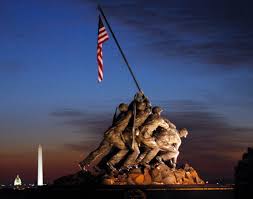
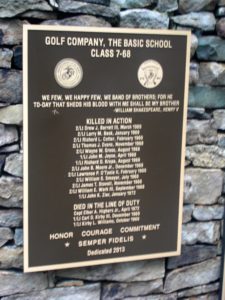
Earlier this month about 40 of us old Marines showed up for the 50th Anniversary reunion of my USMC Basic School Class. The reunion included trips/visits to Marine Corps Base Quantico, to Marine Corps Barracks in Washington, DC, and to the Museum of the Marine Corps. We were able to have a number of interactions with current active duty Marines.

I want to share my take-a ways from the visit.

While I have included a few of my Marine buddies on the notification list for this Blog Post, my assumption is that the majority of you reading this do not have much direct experience with the military, much less with the Marines.

Most of you know that I joined the Marines in 1967 and served with them in Vietnam. I assume that you know this since I only direct and promote this Blog to friends and relatives. If you don’t know me personally, I will try and give you enough of my background so that you have some idea of where I am coming from.

For you Marines, especially those of you who attended the recent reunion of The Basic School Class 7-68, please call BS on me if you think I am overstating, overlooking, or misinterpreting my take-a ways from our recent re-exposure to the Marine Corps.

Take Away # 1 – Things Have Changed

As the tour bus carrying our group of old Marines and spouses pulled in to The Basic School parking lot at Quantico there were three Marines doing physical training; pull ups, push ups, etc. One of the Marines jumped up on the big 25 foot hanging rope and quickly ascended to the top with seemingly no effort. Almost all of the old Marines and their wives saw this Marine and were impressed and nodded approvingly as she slid down the rope and ran off in step with her male counterparts.

All but two of the 250 of us who attended The Basic School together in 1968 were white men. That is who were officers in the Marine Corps at that time. Of the hundreds of Marine Officers I came in contact with during my 4 years in the Marines (1967-1971), I only remember personally meeting one African-American Marine officer and that was in Vietnam.

There were women Marine Officers who also trained at Quantico when we were there, but they were totally separated from us – I don’t remember ever meeting any. The women officers did not attend The Basic School, they had a separate course of their own somewhere else on the base. As I recall it, the women 2nd lieutenants had to salute their male counterparts of the same rank – at least while at Quantico. Although many women served as Marine officers during that era, my guess is that is was a very small percentage of the total.

Today the scene at The Basic School is quite different. The Corps is more representative of America. There are Marine officers of color and the training is fully integrated for men and women.

The Marines even recently graduated one female from the very difficult Infantry Officers Course. Very few women will likely serve as Marine Infantry Platoon Leaders, but the door is open for those exceptional women who can complete the extremely difficult physical and mental course. The reality is that many men would not make the cut in the Infantry Officer Course either and will serve in other specialties, like communications, as I did.

I didn’t take notes during the visit, but I understand that about 20% of Marine Corps Officers today are non-white. This is certainly different from our society as a whole, but it is a big change from 50 years ago.

The face of war has also changed. In 1968 lieutenants primarily made tactical decisions relating to deployment of their Marines. These were often life and death decisions.

One of the changes that I took notice of is that now Marine lieutenants and captains deployed to the middle east are still making those life or death tactical decisions. But in addition, they might well be the senior military presence in a small remote village and often have to work closely with a wide array of local military forces.

This forces junior officers into the position of having to make, in addition to tactical and leadership decisions, strategic and ethical decisions about interactions with local civilians without the benefit or help of senior officers. A lot is being asked of today’s young officers.

And of course the technology has greatly advanced. During our sit-down dinner, we had a very comprehensive review of new technology by our keynote speaker, Major General Niel Nelson, from the Marine Corps Combat Development Command. In his current role, General Nelson is the deputy commander of the organization within the Marine Corps that evaluates and procures new equipment and weapons systems for the Marine Corps.

As you might guess there are technological advances worthy of the latest super-hero or action-adventure movies, but of course these are real. This aspect did not really surprise me, nor did the cost. Again, I did not take notes, but I did hear a lot of people murmur “wow” when the General quoted the costs of the new equipment. The cold hard truth is that if you want the very best equipment, it is going to cost.

We got to see, and try out, one of the new simulated small weapons ranges while at The Basic School. This range uses real rifles, machine guns, and anti-tank weapons that have been modified to be used with a gigantic video screen simulating various combat situations. The weapons recoil and function in a manner similar to their “real” counterparts, but the “rounds” are electronic and you can see them hit (or miss) their targets on the giant screen.  I tried out one of the machine guns and found that my marksmanship skills are certainly not up to par.

The Marines still use live fire ranges of course, but this simulated range affords much more opportunity for Marines to familiarize themselves with the weapons, improve their skills at a small fraction of the cost of live ammunition. A single anti-tank round today costs about a thousand dollars so you get the idea.

I was also reminded of the lethality of the weapons that Marines carry and must be trained to use. While they still use a version of the M-16 that was used in Vietnam, today they are trained on a much wider range of modern weaponry.

During our tour of Quantico we also got to visit HMX-1, the aviation unit at Quantico which provides the Marine One helicopter that carries the President. We got to visit one of the hangers and talk with some of the pilots. On the walls were pictures of all of the Presidents back to Eisenhower boarding or un-boarding one of the Marine helicopters.

The pilots were very personable and articulate and you could tell that they took their job and responsibility very seriously. The unit also provides aviation support for other Marine operations in the DC area including training missions at Quantico.  In addition to the Marine One helicopters (there are actually several) this aviation unit flies the V22 vertical takeoff aircraft.  The V22 has become the workhorse for transporting Marines and equipment.

Another aspect that has changed is that the Marine Corps now provides additional training for those officers most likely to engage in combat, the Infantry officers, or as we used to call them, the grunts.

When we graduated from The Basic School in 1968, those assigned to the Infantry went directly to infantry platoons in Vietnam. Many were killed, often soon after arriving. I don’t know the statistics off the top of my head, but there is no doubt in my mind that the these officers had the most dangerous assignments. I certainly respected them and saw them as a few among the few. What I also believe is that they were not given enough training prior to being deployed in the nitty gritty aspects of leading an infantry platoon in combat. All of us at The Basic School were provided this training, but I know for sure I would not have been ready for those assignments.

Fortunately the Infantry officers today receive an extra 13 weeks of training at the Infantry Officers Course (The one mentioned above) at 29 Palms in California. By accounts it is one of the toughest courses in the military, on par with Army Ranger and Navy Seal training. I’ll leave that debate as to which is tougher to others, but suffice it to say it is a comprehensive exhausting course which should better prepare these officers for combat. No amount of training can make one fully ready for combat, but the Marines seem to be addressing an important need.

Times have changed indeed.

Take Away # 2 – Things Have Not Changed

On the other hand, the basic essence of being a Marine does not seem to have changed much at all.

At The Basic School we observed marshal arts training. We got a briefing by a really gung-ho retired colonel who now leads the marshal arts program there. He and his Marine demonstrators were pretty impressive. The Marines have modernized some of the terminology and now issue different color belts for achieving higher levels of proficiency, much like what civilian marshal arts instructors do.

At the end of the presentation, however, I did not see that much difference in purpose from the hand -o-hand combat and bayonet training that I received at boot camp at Parris Island as an enlisted Marine and again at OCS and The Basic School as a candidate or newly minted second lieutenant. There is still a strong emphasis on building a warrior mindset and building self-confidence. Make no mistake about it; even though these are outwardly very respectful and clean cut young men and women, these Marines are still being trained to kill if necessary.

All of the men who I served with at The Basic School in 1968 had chosen to be there. We all knew full well that we were going to Vietnam. It is also undeniably true that, since almost all officers were primarily from the middle to upper-middle class, we could have chosen an easier/safer path as did most of our non-Marine contemporaries whether they served in the Military or not.

The Marines today also know full well that they will likely be serving in combat at some time in the not too distant future. They also realize that, unlike most of their Vietnam era counterparts (Us old guys), they will probably serve multiple tours whereas most of us only did one tour in Vietnam.

The draft ended in 1973, so these Marines, like all service men and women who have served during the last 4 decades have been volunteers. Having spent the vast majority of my own 29 years of military service mostly in administrative personnel positions in the Army, I can testify that there are “volunteers”, and then there are “VOLUNTEERS.” These young Marines, like Navy Seals, Army Rangers, and Air Force Special Ops persons all fall into the later category.

They have chosen a path that is difficult and dangerous like virtually every Marine before them.

The Marines we met talked a lot about tradition. The Marines, both officers and enlisted, were respectful, articulate, well informed, and positively focused on their duty and mission.

I am not naive to the fact that the Marine Corps certainly hand picked the women and men we came in contact with during our tours of Quantico and the Marine Barracks at Eighth and Eye in DC. Nor am I blind to the fact that not all Marines are admirable. We had some bad actors in the Marine Corps in 1968 and I have no doubt that there are some today as well among the 180,000 plus on active duty around the world.

But the culture of the Marine Corps seems sound and I believe that the overwhelming majority of Marines today are more than deserving of our respect and support. Traditions of honor, character, honesty, and professionalism have endured and, I might add, seem stronger than they were at the height of the Vietnam War when I served.

While today’s Marines have much better equipment, weapons, communications and all sorts of air support available to them, the really crucial life and death decisions are still made at the squad (13 Marines) or platoon (about 44 including a Navy Corpsman) led by junior NCOs and Officers. These Marine leaders have to be women and men of character as well as being warriors.

Take Away # 3 – We Should be Grateful

I know that some among you reading this post are pacifists and don’t have much use for aggressive military action of any kind, much less war. I respect that desire for peace, and I venture to surmise most Marines share your dislike of war.

I believe, however, that humans have not yet come anywhere near the levels freedom and justice that would allow us to live safely and securely without a strong military capability. The Marines represent a major portion of that capability for the United States.

During the reunion we also got to visit the Museum of the Marine Corps. It is one of many wonderful National Museums in the greater Washington, DC area and I strongly recommend it. This was my third visit to this museum and this time we spent quite a bit of time in the WW1 exhibit which details the Battle of Belleau Wood which was fought near the Marne River in France in 1918. The exhibit brings home the gravity of the sacrifices of the Marines who fought and died there. Even 100 years later the “reasons” for WW1 are not clear.

I was saddened to think that we as a Nation could put today’s fine young men and women Marines at risk without really good reasons. It worries me that only a very few of the political leaders making decisions that could cost Marines their lives have any military service themselves. Most have no more than a cursory understanding of what these fine young men and women Marines are all about or the consequences of deploying them unnecessarily.

It is one thing to boast about how strong our military is and to threaten adversaries in a display of false bravado. It is quite a different thing to have the experience that tempers bravado with wisdom and true physical, mental, and moral strength.

As Eisenhower guided the graduating cadets at the West Point graduation in 1947, “War is mankind’s most tragic and stupid folly; to seek or advise its deliberate provocation is a black crime against all men. Though you follow the trade of the warrior, you do so in the spirit of Washington — not of Genghis Khan. For Americans, only threat to our way of life justifies resort to conflict.”

Fortunately we do have a number of senior leaders within the military today with combat experience who, like Eisenhower, temper the warrior spirit with wisdom and character.

There are dictators, strongmen, and tyrants in the world who daily impose their will upon their peoples for their personal gain of power and wealth. There are also zealots of many backgrounds who would impose their singular views on the rest of us using any means necessary.

We can argue about exactly who these people are and why they do what they do, but their existence is undeniable. This was true in 1918 and it is true today: There is still evil in the world.

Like it or not, we need the Marines.

But this post is not about politics, it is about the reality that we as Americans are blessed that we still have young men and women of character and courage willing to risk their lives to support our democracy.

We are very lucky to have them in today’s United States Marine Corps.

Semper Fi.

Evil

A number of years after I graduated I had an occasion to visit with my Swarthmore High School friend Jay Castle’s mom, Lela Castle, at her home in Bellevue, Washington. I can’t remember the exact conversation we were having about some recent local crime event that led to Jay’s mom’s memorable response. But I do remember her response, “Some people are just no good.”

I remember this quote, not because it is unique or original, but because of the matter-of-fact and certainty with which it was delivered. Jay’s mom was unequivocal about this and I have come to believe that she was right about this, as some people are “just no good.” I also believe, that within this group of “no good” people there is a subset that is flat out “evil.”

When I think of truly “evil” people I am referring to those for whom there is absolutely no answer to the question, “Why would someone do such a horrible thing?”

I understand why someone robs a bank, they want the money. I can even understand why they might shoot a guard in order to get away.

I cannot, however, fathom how someone could shoot first graders at point blank range as they huddle behind their teacher in a closet. There is no answer to the “why” for such an horrific act. The only sense I can make of it is that this is pure evil.

With frightening regularity we are introduced to another mass killing by one of these evil people here in the U.S. I won’t grant any of them the respect of mentioning their names, but their evil acts have come to be known by the locations of their atrocities: The 16th Street Baptist Church in Birmingham; Columbine High School; The University of Texas Tower; the Oklahoma City Federal Building; The Twin Towers; Virginia Tech; Sandy Hook; the Emanuel AME Church in Charleston; the Orlando Pulse Nightclub; The First Baptist Church in Sutherland Springs, Texas; The Route 91 Harvest Music Festival, Las Vegas; and this week, Parkland High School in Florida. The really sad part is that this list is just from the top of my head, there are hundreds more that most of us are not even aware of.

What these acts all have in common is that they were perpetrated by the very worst of the evil people, those who kill indiscriminately and brutally and in horrifically large numbers.

I have come to believe that for this very small number of truly demented humans there is no other answer than that they are just evil. We will never know why, they just are. Their background or motives are irrelevant to me – their actions are what make them evil.

Good vs. Evil

The history of mankind is a long story of good vs. evil. Our religious books and ancient literature give us plenty of reason to believe that there have always been, and always will be, some evil people in the world. As Bob Dylan says in his song, “Well, it may be the devil or it may be the Lord , But you’re gonna have to serve somebody.” For some it is clearly the devil.

Fortunately for us all, the vast majority of people in the world are not evil. Even “bad actors” like burglars and thieves don’t fall into the “evil” category for me. I reserve the term “evil” for those who are seemingly incorrigible and will do unspeakable things to their fellow humans for extreme and demented reasons. These are deranged individuals.

While the truly “evil” people in the world may be vastly outnumbered, they nonetheless can cause tremendous harm. Even worse, they can create fear and hatred that magnifies their influence far beyond the horrific acts themselves. Left unchecked, they could destroy society by causing an over reaction that in turn creates even more violence by “copycats” or by groups turning against one another in a desperate attempt to “do something.”

After the recent horrific church shooting in Texas, I saw an interview of Texas Governor Greg Abbott on the CBS Morning News. When asked what we should do, the governor replied, “Pray, hug each other, and trust in God.”

Yes, that’s all well and good, but the old Marine in me says, “Bullshit, that’s not nearly enough!”

We have got to get off our collective asses and do something.

Here are six steps we can take:

Be Prepared to Kill the Evil Bastards

At the point of an attack there are only two options open to us: fight or flight. Sometimes it is true, as the National Rifle Association likes to say, that “the best way to stop a bad guy with a gun is a good guy with a gun.” I generally despise the NRA for its valuing its industry’s profits above human life, however there is a grain of truth in this statement that should not be totally rejected.

I recently went to the new Mercedes Benz stadium in Atlanta to watch a sold out Atlanta Union soccer game with my son Jamie, daughter-in-law Keeli and my two grandsons Brady and Bryce. We had to enter the grounds through a separate security gate because we had a stroller. I could not help but notice the presence of several very heavily armed security guards in full combat gear and either AR-15 or M-16 rifles (They can look identical) standing silently and watchfully just outside the entrance. I must admit I felt a lot better seeing those “good guys with guns” there “just in case” even though it is sad that it has come to this.

Killing in self-defense is OK in my book and sometimes that is what is needed. It is therefore prudent in some situations to have armed first responders present both as a deterrent and as a means of quick response.

Unfortunately, in almost all cases the evil person has the element of surprise. In the recent attack in Texas a brave neighbor confronted, shot, and wounded the killer, thus limiting the damage. This was a textbook case of a good guy with a gun coming to the rescue. Nonetheless, 26 people died at the hands of a demented evil person before he could be stopped. The “good guy with a gun” won’t always be fast enough to stop the violence.

And although it makes sense to have armed guards at major events like the one I attended in Atlanta, it makes no sense at all for a seven-person prayer group like the one attacked in Charleston. Also, armed guards are of little use against evil people who use bombs.

Alas, “Killing the bastards” is only a very partial solution at best.

Lock ‘em Up

There is an island in the south Puget Sound called McNeil Island which I have passed by many times on the ferry en route to my sister Martha’s cottage on nearby Anderson Island. McNeil was originally a federal penitentiary but now is operated by the State of Washington where the very worst of the worst sex offenders are kept away from society permanently.

These people (All are men) won’t commit any more crimes, so locking them up for life does keep us safe. But of course they are only at McNeil Island because they got caught “after” they committed their evil acts. This is also the case with most people in regular prisons with life sentences.

I don’t think much of the now disgraced sexual predator and former Fox News personality, Bill O’Reilly, but I did hear him propose an idea that made sense to me during an interview following a mass shooting. O’Reilly suggested that anyone involved in a felony using a firearm would automatically face a long-term sentence in a Federal Penitentiary. He posited that this would both take dangerous people off of the streets and act as a deterrent to the use of firearms.

I can see that this would help with evil persons who have a criminal history and who are caught first while committing a lessor crime. I don’t know how this helps with persons who are “under the radar” until they commit their horrific acts.

The other huge problem with the “lock ‘em up” and capital punishment solutions is that many of these evil men, and yes, almost all of the ones we fear the most are men, seemingly expect to die in a singular blaze of glory. Neither jail nor death is a deterrent to them.

“Locking them up” does work in some cases, but again, it is only a partial solution. We need to do it, but it won’t undo the harm already done and it won’t stop those wanting to die themselves in the process of committing their first attack.

Cut Them Off

Evil people are still just people. Unlike Voldemort, Darth Vader, or the White Walkers, real life evil people do not have any super powers. They need tools to do the worst of their evil deeds. The ability of an evil person to do harm to others is directly proportional to the means available to them.

I would hate to be strangled, but even at 70 I would like to think I could put up a pretty good fight if someone were trying to strangle me. If the only weapon evil people have is their hands, strangulation is the only means available to them. Given the choice of facing an evil person trying to strangle me or facing one trying to shoot me, I would prefer the former. It is also very difficult to be a mass strangulation killer.

We are of course, not the only society to have “evil” people. All societies deal with evil people and limit in some way the access that people have to the tools (AKA Weapons) that evil people have available to them. Knives, bombs, poison gas, and even battery acid have been used worldwide. In the US our evil doers prefer guns.

In their 2008 landmark case “DC vs. Keller”, the Supreme Court affirmed the right of citizens to bear arms for “lawful purposes” such as self-defense in their own homes. The majority opinion, written by the late Anthony Scalia, went on to state that legislative representatives clearly have the power to restrict the access to weapons by felons and the mentally deranged. Scalia’s decision goes on to say, “Like most rights, the Second Amendment right is not unlimited. It is not a right to keep and carry any weapon whatsoever in any manner whatsoever and for whatever purpose.”

Scalia further clarified that the law can forbid carrying weapons in sensitive places such as schools or churches and can impose qualifications on the sale of arms.

People performing evil acts DO NOT HAVE THE RIGHT TO BEAR ARMS. Laws can and must be passed to make it more difficult for mentally deranged people to obtain firearms or other weapons in the first place.

We instituted significant changes to how ammonium nitrate is distributed and secured following the bombing of the Federal Building in Oklahoma City in 1995. When terrorists overcame pilots and flew planes into the Twin Towers in 2001 we tightened up airport security, developed a no-fly list, and started locking the cockpits. Laws and regulations can, and should, be changed to meet the needs of the people to remain safe as the means of doing harm change over time.

We need extreme vetting of all weapons sales to make sure that only law abiding and mentally sane adult citizens have ready easy access to deadly weapons. I would like to include some means of testing mental soundness in this extreme vetting. Without controls in place, we are giving evil people easy access to tools that provide them tremendous ability to do even more harm.

Additionally we need to continue screening for firearms and bombs at strategic entrance points at highly vulnerable “targets” such as airports, arenas and courtyards. Maybe even schools and churches will need this level of protection.

“Cutting them off” from their most deadly tools will definitely help even though it won’t stop evil people from committing evil acts altogether, especially if they have help.

Punish Their Enablers

In a country with almost as many firearms as we have citizens, it is unrealistic to pretend that we can keep dangerous weapons out of the hands of all evil people. But we sure can limit the damage they can do by holding persons who sell weapons and ammunition responsible for vetting the persons they are selling to.

Sell a gun or explosives without doing a background check: pay an extreme fine.

Sell a gun or explosives without a background check to a felon, mentally ill person, or a terrorist who subsequently commits murder: face possible prison time.

For this approach to work, we must have enhanced extreme vetting in place as a part of a background check system capable of identifying high probability evil doers. We need to identify them up front in order to keep weapons out of their hands. The National Crime Information Center database operated by the FBI needs to be fully supported (and funded) at all levels and there can be no “loopholes” like gun shows where background checks are waived. The national data base also needs to be cross referenced with other lists of known risks such as the terrorist “no fly list”, military discharge records, and other sources of information about mentally ill people like known domestic abusers.

I would rather we err on the side of occasionally having someone temporarily denied the ability to purchase a weapon than accidentally selling a weapon to someone who is mentally ill, a felon, or a potential terrorist. The first example of an error is an inconvenience that can be easily fixed, the second error is permanent and deadly.

Reputable gun dealers are already making the background checks. The problem is that the database is far from complete and does not include huge numbers of people who should not be allowed to buy weapons (e.g. persons on the terrorist “no-fly” list). The other problem is that in many states background checks are waived for gun shows. This loophole needs to be closed.

Non-reputable gun dealers (e.g. gang members selling out of the trunk of their car) need to be jailed along with their customers.

With freedoms come responsibilities. Persons who sell (or give) weapons of any kind to evil persons who should not have weapons must be punished. Deterrence will work with law-abiding people that includes the vast majority of people who sell weapons.

Yet again, “Punishing the Enablers” won’t stop all illegal sales of weapons, but it will help.

Help the Poor Bastards

It may seem illogical for me to suggest that we need to help people who I have already categorized as mentally deranged and incorrigible. Here are reasons for suggesting we need to apply mental health resources to help solve the problem:

My first reason for helping people even though they are “evil,” is that they are still human and only God or whoever is ultimately in charge can make the final judgment. Maybe these ideas of “charity” and “forgiveness” were infused in me growing up as a preacher’s kid. If I had to, I am pretty sure I could “pull the trigger” to stop an evil person “in the act”, but I would much prefer to pay a little more in taxes and do whatever is possible up front to possibly avoid the act altogether.

A more practical reason to employ mental health resources is that we may be able to identify a potential threat in advance and head it off. Mental health professionals have some tools that they can apply. Drugs might help, so might mandatory hospitalization or even permanent placement in a mental institution for those criminally insane. If a mental health professional says, “look out, this guy is dangerous,” we best listen.

Often family members or friends are the first to notice something is “wrong”. But what can they do? In Seattle in 2012 a man walked into the Cafe Racer coffee shop and killed four patrons shooting them in the head execution style with two .45 caliber pistols. He then hijacked a car and purposely ran over a woman killing her before being confronted by police and taking his own life.

This particular killing is close to me because I used to drive by Cafe Racer, which is several blocks from where my niece Rachel lives in the University District, every morning on my way to work at Safeco Insurance. The killer’s family members had tried for years to get him some help, knowing full well that he was not “right” and fearing that he would do something like this. The man’s father was on KOMO radio yesterday pleading for changes to the law that will allow family members to contact law enforcement and force a mental evaluation which could have firearms taken from persons shown to be very mentally deranged.

Ready access to mental health resources is also beneficial to persons contemplating suicide. Although not directly related to the topic of “evil” people, suicide is a significant societal problem that could be helped by increased access to mental health treatment. Providing more easily available mental health treatment has many side benefits.

As with the other suggestions I have made, this is not a total answer. Some evil people appear totally normal until they “snap” and others can manipulate and fool even the most capable mental health professional. Nonetheless, in some cases mental health treatment will prevent the loss of life. We need to increase access not only to “help the poor bastards”, but to save ourselves.

Compromise, Dammit

Pardon the extremely tasteless pun, but, there are no “silver bullets” to protecting us from truly evil persons.

We can’t eliminate all violence done by evil people. Even in countries with strict laws about weapons ownership there are still senseless murders using other means.

But we can reduce the carnage. Seat belts don’t save everybody but they are still save thousands of lives every year.

There are some compromises we need to make:

• We will have to accept that in some cases we will have to have more armed guards.

• We will have to put up with a few more hassles when buying and selling guns or other weapons in order to prove to the seller that we are not one of the “evil people” who cannot have weapons. No sane law abiding citizen need be denied any of their rights, extreme vetting and background checks are not aimed at them, they are aimed at weeding out the evil doers.

• All of us will have to pony up in more taxes for the funding that will be needed for both added security and for mental health resources which include may include mandatory placement in a mental institution for the extremely mentally ill.

Recap

Here are things we can do in the United States to better protect ourselves against truly evil people:

Be Prepared to Kill The Bastards: Accept that more armed first responders/guards may be needed

Lock ‘em Up: Invoke mandatory long federal prison sentences for felons who use weapons in crimes.

Cut Them Off: Extreme vetting to prevent the sale of all weapons sales to the mentally ill, felons, or terrorists.

Punish the Enablers: Heavy fines or prison for failure to fully vet weapons sales to the mentally ill, felons, or terrorists.

Help the Poor Bastards: Expand mental health capabilities to identify and treat the mentally ill.

Compromise: Accept “less than perfect” incremental fixes. Save as many lives as we can.

If you have any better ideas I would love to hear it, please include a comment.

Respect


I stand for the national anthem. I also remove my hat and place my hand over my heart. The flag flies proudly in front of our home in Gettysburg and from our deck in Seattle.

I do this out of respect, not for the flag or the anthem itself, but for the country which they represent. To me it is all about the underlying values and promises outlined in The Constitution of the United States. These guarantees can best be boiled down to the final six words of The Pledge of Allegiance, “…with liberty and justice for all.”

Sadly we as a people do not fully live up to the “for all” condition of our shared value statements.

Our country’s founders wisely realized that erosion of liberty and justice for all was a likely outcome. The founders knew that there would always be evil people among us who would impose their will upon others and deny others their rights under The Constitution.

The Constitution guarantees the right to speak up against injustice. This is especially important when that injustice is perpetrated by representatives of the government.

Patriotic citizens have long warned about the dangers of the government denying rights of individuals. They are absolutely right to have these concerns. Authoritarian governments hate the freedom of speech and they use their power to systematically eliminate anyone who speaks out against any of their actions.

I have tremendous respect for law enforcement. They serve in a high-risk jobs. Our society is dependent on them. We owe them our gratitude. Even the best police departments, however, may have officers who misuse the power given to them and fail to equally administer justice.

African Americans have known for years that there are some bad police officers who will literally kill them for minor infractions or misunderstandings. I would not have believed this to be so prevalent years ago, but the advent of the availability of video evidence has provided us all a glimpse into the truth of widespread police brutality against blacks and other non-white populations. It is frighteningly clear that we do not yet have equal justice for all. Changes must be made.

By taking a knee during the National Anthem, football players make a powerful statement. Taking a knee is a solemn and important statement in any context. We propose marriage taking a knee. We kneel at church. Historically men knelt before the Queen to be knighted. Football players take a knee when listening to their coaches.

It is a powerful statement for football players to use peaceful protest and the celebrity media platform that is available to them as professional athletes to speak out about racial injustice.

Unfortunately many have interpreted the act of taking the knee, bowing one’s head or sitting silently during the National Anthem differently. They see the meaning of this silent, peaceful, and respectful protest action by a black man as an affront to our military. Some believe that racial injustice does not really exist and that police are always innocent and are just doing their job.

Trump has verbalized these narrow, simplistic, and twisted assumptions about the motives of protestors. With sinister and deadly impact he as driven a huge wedge between Americans. We are divisible and Trump knows it. The white supremacists could have no stronger ally than Donald Trump. Trump’s motives are unknowable, but the consequences are sadly predictable.

By taking a knee to protest racial injustice, players do not threaten democracy, they embody it and they respect it.

The real disrespect I see right now is Trump’s assault on our fundamental freedom of speech and our right to protest. His use of the power of the presidency to try to limit the free speech of those he does not like should make conservatives and liberals alike very angry. It makes me furious. Trump is a real threat to our constitutional guarantees.

Heritage

Battle of Gettysburg – Brickyard*

In my East Coast home there are a number of souvenir shops that cater to tourists from around the country who come to visit the site of the single most important battle in US history, the Battle of Gettysburg. In three days in July of 1863 the future of this country was set on a course that impacts us today in ways we don’t even know.

The defeat of General Lee’s army on the third day of the battle was the beginning of the end of the system of slavery that was justified by the idea/belief that whites were superior to people of color.

In November of that same year Republican President Abraham Lincoln gave the famous Gettysburg Address, arguably the greatest speech ever given, to honor the thousands of soldiers who gave their lives at Gettysburg to support a country and system of government that held that all people are created equal. The speech was given at the dedication of the Gettysburg National Cemetery where most of those who gave their lives in the battle in defense of our nation are buried. It is truly hallowed ground that moves me every time I visit it.

Thousands more gave their lives at Gettysburg as enemies of the United States of America in an effort to retain the economic system of slavery. There were no speeches given on their behalf and for many years the bodies of the dead laid unmarked in piles in large holes that were quickly dug and then covered up. Years later women who had lost loved ones in the war formed an organization that recovered many of the remains and buried them in cemeteries in the South. No monuments were allowed on the battlefield to honor the confederate dead. They were, after all, traitors.

I recite this overly brief and incomplete history of the battle to get to a point that is relevant today. Lincoln’s armies ended slavery in the US, but they did not end the concept and belief in white supremacy. Sadly this idea is alive and kicking today.

In the afore mentioned souvenir shops you can buy tee shirts imprinted with the confederate flag and the phrase “Heritage not Hate.” You see many of these type of tee shirts being worn around Gettysburg. There is an assumption that the word “Heritage” explains somehow that the person wearing this shirt is really just honoring past history and some vague romantic concept of a way of life and a “lost cause” that is “Gone with the Wind”.

This is where I have to call bullshit on the idea of “Heritage” and those people who pretend that the confederate flag is not a racist symbol and that “Heritage” is not a code for white supremacy. This starts with you, Mr. President.

Many years after the battle of Gettysburg, the U.S. government allowed for the construction of monuments for the Southern fighters who lost their lives at Gettysburg. At the 75th anniversary of the battle there was a Peace Light with an eternal flame installed to help with reconciliation and healing. I think these efforts were appropriate and that these monuments help us to understand the gravity of the battle and show respect for the dead – even those traitors who fought against the United States, most of whom did not themselves own slaves and many of whom were conscripted.

Around the same time (early 20th century) many cities in the South, and a few in the border states, started erecting monuments to confederate generals and others associated with the Confederacy. They also named roads, schools, and other civic buildings after them.

I do not know the true motivation for these moves and I do accept the argument that there is some value in remembering who these people who fought and suffered in the war. It makes sense to me to have monuments and statues in a place like the battlefields of Gettysburg, Antietam, Shiloh, or Chicamagua where my great-great-grandfather, Private Samuel K. Sayer of Company H/51st Ohio Infantry, was captured.

I don’t see the value of a statue of Jefferson Davis, the President of the Confederacy, in a prominent location in a city unrelated to an historic battlefield or museum. This kind of statue makes the statement that “we were right all along and these are the people that you should look up to.” The message is subtle but clear to me as a white guy. I can only imagine how clear and intimidating this message is to people of color.

There is a huge difference between statues and symbols on battlefields and in museums and symbols in prominent civic locations near city halls and court houses. Former South Carolina Governor Nicki Haley clearly recognized this and took the wise and bold step of removing the confederate battle flag from state property. Other civic leaders have followed suit and moved to remove hate charged statues that do not represent the values of their citizens or our country.

Keep in mind that the statues almost exclusively focus on the generals and leaders of the Confederacy. They are not in tribute to the thousands of young men who fought bravely and suffered immensely nor are they solemn reminders of the horrors of war. The statues honor those who executed the war in an effort to keep slavery intact not the poor whites who actually did the fighting and who suffered the consequences.

Many of these symbols of the confederacy remain in prominent civic locations and will do so as long as people continue to honor those who believed strongly in white supremacy and were willing to fight against the United States of America to keep a system in place that enslaved millions of people.

Continued acceptance of the use of the symbols of the Confederacy emboldens and strengthens the KKK, Nazis, and other white supremacist hate groups. It is doubly important that our political and other influential leaders not condone the use of hate group symbolism. The Heritage they support is for whites only. (No Jews or LGBT either BTW.)

  • The mural depicted at the beginning of this article is on the Coster Avenue Battlefield which is only about 50 yards from our home in Gettysburg.  There was a major skirmish at the brickyard on the first day of the battle.  The Union soldiers where conducting a holding action to delay the advance of the Confederate forces.  This is an example of the use of the Confederate Flag in a public space that seems appropriate to me as it helps understand the event and is a reasonable approximation of what happened on that site. 

Healthcare

I have excellent healthcare. I wish all Americans could have the same medical care as I do, but sadly many do not. Fortunately, the military has a model solution that could reduce pain and suffering and help the middle class financially. It is called TRICARE.

As a retired “old soldier” I am now covered by the military’s TRICARE system which provides healthcare to military families and retirees using private medical providers.

With TRICARE I don’t have to worry about basic healthcare. Healthcare is available at an affordable annual fee with reasonable co-payments from a great local doctors and nurses.

Providing basic healthcare to service members, retirees, and their families is clearly the right thing to do. But so is providing this vital component of well being to the rest of society.

The moral argument is irrefutable. With any sense of decency, good and kind people care about people who are ill and want to reduce pain and suffering. If you don’t care about others, stop reading now, as I have nothing more to say to you.

If you do care about people who are ill, please consider the The US Constitution, which I swore to support and defend when I joined the Marines over 50 years ago. The Constitution specifically identifies, “To Promote the General Welfare”, as a fundamental reason for the establishment of our great country. Nothing is more basic to our general welfare than good health.

Providing everyone with healthcare will benefit all of society. A healthier general population lowers overall medical care costs & increases productivity. Any system which denies people coverage because they can’t afford it and causes them to wait to get healthcare until they have to go to an emergency room is extremely inefficient.

The military knows this to be true. The mantra I remember regarding military healthcare was, “Prevention”, “Prevention”, “Prevention!” In the Marines we had “sick call” every morning where people with minor medical issues went to see a Navy Corpsman to take care of their problem right away – before it got worse – and then get back to work as soon as possible.

Service members have the opportunity to take care of medical problems early on, before they get worse. If they get treatment right away, service members are then more productive, and save the government big money down the road. We need a system that allows everyone in the country to do the same thing – get the care they need, and then get on with their lives.

Yes, providing a healthcare system like TRICARE to everyone would be expensive in the short run. But this cost is offset by the long term benefits of a healthier, more productive society.

And some things can’t be reduced to dollars and cents. Sometimes you need to do things just because it is the right thing to do.

Reducing pain and suffering is always the right thing to do and instituting a Nationwide single-payer healthcare system something like TRICARE for all Americans is clearly a good solution.


Immigration

                        Sunday, March 19, 2017

RE: Immigration Reform

Dear Senators Murray and Cantwell,

Please work with one or more of your fellow Republican Senators McCain, Graham, Rubio, and/or Flake to reintroduce the 2013 Immigration Bill* with ONE MAJOR CHANGE: Replace a “Path to Citizenship” with a “Path to Honorary Citizenship.”

My great-grandfather James Alexander Simpson entered the US from Ontario, Canada around 1900 with neither documentation nor permission. He and an uncle crossed the border with a cow and walked to Minnesota where they settled. He never became a citizen, nor did he vote in the US. However, he married, raised a family, started several small businesses, and contributed significantly to the communities he lived in.

Great grandpa’s direct descendants represent a cross-section of Americans including teachers, farmers, preachers, doctors, professors, business persons, tradesmen, sales persons, soldiers, and Marines.

To my knowledge my great-grandpa was never in any trouble with the law and was a contributing member of our society throughout his life. Likewise I know of none of his direct descendants who have ever been in serious trouble with the law. America is a better country because he came, and was allowed to stay and raise a family.

Great Grandpa Simpson did not need to have citizenship to leave a positive legacy in this country.

Likewise, the first generation of today’s undocumented immigrants can leave similar legacies without actually becoming citizens themselves.
I recommend issuing those granted permanent residency with an opportunity to apply for an honorary citizenship upon reaching age 65.

This would require that they meet reasonable criteria like those described in the 2013 Immigration Bill. Otherwise law abiding undocumented immigrants don’t need to vote, they do need an assurance that they can keep their families together.

My understanding is that it was primarily the “path to citizenship” component that killed what otherwise was a workable and fair bi-partisan legislative solution to our broken immigration system.

Please reach across the aisle and work with one or more of your Republican colleagues who you think might be receptive to this idea.

It is even possible that President Trump and Speaker of the House Ryan might be receptive to this kind of solution/compromise. They may well listen if a bi-partisan group of Senators present them with a solution that provides for border security, grows the economy, preserves the order of law, and treats law-abiding immigrants with respect, dignity, and kindness.

Thank you for your consideration of this idea.

Respectfully,

Jim Simpson
Seattle, WA

PS – Keep up the good work.

* (Border Security, Economic Opportunity, and Immigration Modernization Act of 2013 , S. 744)

Benchmarks

Give Trump a Chance

Dear friends and family,

I know that some of you voted for President Trump and I have seen a number of comments indicating that we should all give him a chance.  Some of you have also pointed out that we do need for the country to be successful – we are in the same boat after all.

I am very willing to give the new policies and actions being taken by the President and Congress a fair assessment and judge them based on results/outcomes.

Here are some benchmark numbers inherited from the Obama administration that are fairly clear cut.  I will measure success of the current Trump administration/Congress over the next 4 years against these starting points. Please see footnotes below for sources and elaboration on these metrics.

Benchmarks

                                                                                         as of 1/20/2017
Security
# of deaths from nuclear explosions (1945-2016) (1)    0
# of citizens killed by terrorists in US (2016) (2)            43
# of US Military Deaths in Combat Zones (2016) (3)      19
# of Violent Crimes (2015) (4)                                             1,197,704

Economy
Total Employment (5)                                                        145,303,000
Unemployment Rate (6)                                                    4.7%/9.2%
Inflation Rate (CPI) (7)                                                       2.1%
Ave. Cost of 1 Gal of Gas (8)                                              $2.302
Median Household Income (2015) (9)                            $53,889
Median Household Net Worth (2016) (10)                    $88,087
National Debt (1/20/17) (11)                                             $19.9 Trillion
Budget Deficit (FY 2017 est.) (12)                                    $559 Billion
Total Exports (Nov 2016) (13)                                          $186 Billion
GDP Increase Annual Rate (as of 3Q 2016) (14)            3.5%

Quality of Life/Satisfaction/Miscl.
US Health Care Per Capita Spending (2015) (15)           $9,990
% of People with Health Insurance (2015 (16)               90.9%
Drug Related Deaths (2015) (17)                                        33,091
HS Grad or Greater (2016) (18)                                          88.4%

Presidential Job Approval Rating (1/19/2017) (19)         59%

Numbers alone, however, don’t necessarily equate to success. As Einstein said, “Not everything that counts can be counted.” There are of course other very important aspects of life in the US impacted by the Federal Government that do not lend themselves to simple numbers: President Trump’s campaign promise to keep Medicare & Medicaid as is; environmental issues, criminal justice issues, minority and women’s rights, immigration, refugee policy, and many more.

I think, however, that these 19 metrics, which are easily verifiable and understandable, are a good snap shot of “success”.

I am very willing to give new policies “a chance to succeed” and honestly hope that all of these numbers will look as good or better in say 3 1/2 years. I wish President Trump and Congress luck in that regard.

“Giving him a chance” does not mean, however, that we should sit quietly by and not speak out if we see injustice or disregard for our constitutional rights, the rule of law, or basic civility.

I would never vote for Trump in the future no matter what the numbers show because of his negative personal attributes. If, however, new policies and actions actually improve things and don’t cause harm to the environment or violate human or constitutional rights, I would be very willing to consider supporting someone like Ohio Governor John Kasich who could carry successful new policies/programs forward without all of the negativity associated with Trump.

As I see it President Trump has a great opportunity to prove himself with his party controlling both houses of congress – I don’t need to “give him a chance” he has a fair chance already.

So Mr. President, let’s see if you can produce positive results.

Jim

Note: This is not a cut and paste list/posting, I did the research/compilation myself. It is my opinion and my work, for whatever that is worth. I used the most recent metrics available as of the Inauguration on 1/20/17.

Footnotes:
(1) No source really needed here – if we have a nuclear explosion anywhere in the world the rest of the list is of secondary at best. Nuclear war remains the most critical risk to mankind. If a bomb goes off it is a clear failure of both our military (deterrence ability) and of our State Department (diplomacy). These are the most important functions of the Presidency.
(2) National Consortium of the Study of Terrorism, Department of Homeland Security/University of Maryland. 2015 is the most recent published total. From other sources I estimate the number of deaths in the US is 63 for 2016 with 14 from the San Bernadino attach and 49 from the Orlando attack.
(3) Military Times – “Honor the Fallen” listing of those who fought and died in military combat operations (does not include US training deaths or suicides) in 2016. I think combat deaths is a good overall measure of the ability of the US to maintain the peace worldwide and institute our foreign policy at the lowest cost in US life. The purpose of the military and diplomacy is to prevent war, therefore the lower this number the better.
(4) FBI -Uniform Crime Reporting (UCR) Program, violent crime is composed of four offenses: murder and nonnegligent manslaughter, rape, robbery, and aggravated assault. 2015 is most recent year available.
(5) Bureau of Labor Statistics, All employees, total nonfarm, seasonally adjusted through December 2016 (preliminary – most current available as of Jan 24, 2017)
(6) Bureau of Labor Statistics, Labor Force Statistics from the Current Population Survey, Unemployment rate 16 years and over as of December 2016 The first number is the U-3 rate which is commonly used but which is computed differently than the second rate which some call the “real” unemployment rate which counts as unemployed those who are unemployed, underemployed, and marginally employed.
(7) Bureau of Labor Statistics, 12-month percentage change, Consumer Price Index, All Items as of December 2016
(8) American Automobile Association as of January 24, 2017
(9) US Census Bureau, Median Household Income, 2011-2015 American Community Survey 5 Year Estimate
(10) Federal Reserve – Financial Accounts of the United States, Household Net Worth 2016 Q1 most current available.
(11) US Treasury Department , Debt Held by the Public as of 1/20/2017
(12) Congressional Budget Office, Budget Projections for FY 2017 $559 Billion
(13) US Census Bureau – Nov 2016 Most recent month available – includes goods and services. Note that I have measured exports not the deficit. I view exports as a clear indicator of how competitive the US is on the world market. Imports, however show what we are spending as a society. If we pay a fair price for what we are spending we should receive an equal value. We are not spending more than we make if our domestic productivity is high enough to cover these purchases.
(14) Department of Commerce, Bureau of Economic Analysis ,National Income and Product Accounts Real Gross Domestic Product: Third Quarter 2016, (Third Estimate).
(15) Centers for Medicare & Medicaid, National Health Expenditure Accounts. 2015 is most recent final report.
(16) Center for Disease Control, Health Insurance Coverage in the United State: 2015.
(17) Center for Disease Control, Drug Overdose Death Data 2015 Opioids only in this number as CDC does not track all drug overdose numbers – Opioid related (Heroin and Synthetic) are far and away the largest cause of death by drug overdose.
(18) Census Bureau, Educational Attainment in the United States: 2015, 25 and older.
(19) Gallop Poll – Presidential Job Approval

Amelioration

This blog is written for family, friends, and colleagues. Others are certainly welcome to read this, but it is written to and for people who know me personally.

I assume that all of you who are US citizens will be voting between now and November 8.

I also assume that nothing I say at this point will change how you vote.

The question/topic of this post is, “How are each of us going to act on November 9?

From personal communication or social media posts I know that some of you disagree (perhaps even strongly) with my voting decision for president which I explained in my previous post, “Government”.

Neither Donald nor Hillary nor any of their surrogates have ever bothered to meet with me personally to explain their past performance or opinions. Because of this, I have no first-hand knowledge of what either candidate is really like or what they have or have not done in the past. Like you, I rely on my media sources for facts and opinions to help me make my voting decisions. Like you, I have to guess what might change if one or the other is elected.

We all have different sources and see the facts differently and I am not going to enter into a “my sources are better than your sources” or “my critical thinking is better than yours” discussion.

We do, however, have first-hand knowledge of each other, having interacted personally at various junctions in our lives. From these personal experiences I do know that all of you reading this are basically good people who care about others, your country, and mankind.

Some of you reading this are to the left of Bernie, some of you sit in chairs on the far right side side of the room.

I have a pretty good idea about how the election will come out but I could be dead wrong, as could any of you. There will be lots of unhappy people no matter who wins.

My concern is how are we going to treat each other once the dust has settled after the election.

What, if anything, should I say or do differently if I am correct? What, if anything, should I say or do differently if my candidate looses?

To me, family, friendship, basic civility, and the reality we see in our daily real-world lives is more important than the outcome of the election and all the hype surrounding it. There is a surreal “otherworld” feeling I get when I see election coverage or rhetoric that is counter to what I experience in my interactions with real people in everyday life which I have talked about in my previous post titled “America.”

What I fear is the continued demonizing of others we know who do not agree with us politically. If we fall prey to those whose interests are furthered by creating fear and hatred via a “we vs they”/black or white” dynamic, we could all go down together. The idea of a house divided against itself not being able to stand is as true now as it was in Greek mythology (Aesop), The Bible (Jesus), or US History (Patrick Henry, Lincoln).

Some of you are likely thinking, “Jim, you sound pretty naive saying, ‘Why can’t we all just get along?’”

Call me naive then, because as overused as this phase is, it does make perfect sense to me that treating each other in our personal lives with kindness and respect regardless of the other person’s political views is the first and most important step we can take personally to make things better.

On November 9, the day after our election, I plan to focus on the reality that I see in my daily contact with others with whom I come in contact personally. I will still watch TV, surf the Internet, and read my newspapers and magazines to have a wider perspective and context. However, regardless of how they may have voted, I will try to interact with the people I personally know and love based on what they actually do in their lives, not on assumptions of their motives derived from their political point of view.

We would all do well to head the words of Satchmo in his classic,“What a Wonderful World”:

The colors of the rainbow,
So pretty in the sky.
Are also on the faces,
Of people going by,
I see friends shaking hands.
Saying, “How do you do?”
They’re really saying, “I love you”.

Government

As we are now one month away from the 2016 election I thought it would be a good time to share some of my thoughts on the role of government.

Before continuing I would like any anarchists reading this to immediately stop.

If you are still with me I assume you agree that some degree of government is needed for the six billion humans on this planet to survive. The ancients figured out pretty early on that some kind of order is needed to protect both life and property.

Fast forward to 1776. My understanding of the American experiment is that, for perhaps the first time in history, the ultimate power of government rested with “the people.” Well, at least with, “some of the people.” Rights were considered to be given by God, not received as a benevolent gift from some powerful person who was “in charge.”

I am still waiting for tickets to the Broadway musical Hamilton to really get the inside story on the conflict about “how” we should govern ourselves. At what point does “the greater good” override the “individual pursuits.” That fundamental unresolved question seems to have been with us Americans since the beginning.

Side Note to Canadian friends: Like most Americans, I am too ignorant to speak intelligently about the birthplace of my great-grandfather James Alexander Simpson. James Alexander was born in Ontario and never became a US citizen and lived here undocumented (illegally?) till he died.

My very limited understanding of the differences between our two democracies is that Canadians have a fundamental “right to good government” while Americans have an inalienable right to “ the pursuit of happiness.” The Canadian founding fathers seemed to me to have focused more on the collective good while their American counterparts focused on individual freedoms.

But I digress, as this post is limited to government as I have experienced it here in the US.

Inductive Approach – Bottom Up

Most news and talk we all hear this year is about the federal government and I will get to that, but I would rather start this discussion of government at the bottom and work my way up.

In Seattle we live in a condo and I serve as the treasurer on the board of our home owners association.   This is governmental politics at rock bottom, somewhere in the dirt below the grass roots politics.

In a condo disputes and different expectations between members on the type of governance needed must be resolved in a manner that has the best interest of the entire community as a goal.

Even at this lowest level of governance the decision makers have a direct impact on the quality of the lives of their neighbors in areas like security, aesthetics, social interactions, property values of the shared assets, and expenses. How people feel about the place they live is directly influenced by a few people entrusted with power, limited as it is at this level. People are dependent on other residents who volunteer their services.

I think there are direct parallels (and hopefully some good examples) from these simple democratic organizations and the basis for making decisions that are applicable on the national level.

These areas of governance are:

Rules and Structure

Taxes and Fairness

Management and Solvency

Membership and Access

The Greater Good and Service

These are not all of the functions of the Federal Government. Most notably I am not addressing National Defense. These five areas are, however, essential at all levels of governance.

The basic principles I have personally experienced as a board member on our condo homeowners association have application at the National Level.

Rules and Structure

In a condo it can’t be “every man for himself.” Individual freedom is fine, up to a point.

It is my business what I watch on TV, but when I had the sub-woofer turned way up while watching Game of Thrones and rattled the dishes in my upstairs neighbor’s apartment, I had gone over the line (sorry Laurie, Marianne warned me that I had overdone it on the special effects.)

Fortunately my neighbor respectfully requested I turn it down which I did immediately. In that case there was no reason for her to enforce “the rules”.

Most rules at all levels would be unnecessary if people were just courteous, kind, and respectful.

In our little condo the rule breakers’ indiscretions are pretty minor and most people are good neighbors.

But alas at the national level there are some truly bad apples among us. And there are also basically good people who just put themselves first without considering the impact on others.

So we are stuck with rules and some sort of authority to ensue order when necessary.

The documents governing our little condo exceed 30 pages.

At higher levels of government the numbers of pages of “rules” are beyond counting. But at any level there must be a degree of structure that has law and enforcement as a basis for order.

At the National level I often hear people talk about there being “too much regulation.” I rarely, however, hear the specifics that are essential in determining what should or should not be enforced/included in “the rules.”

And, news flash, this is a big country. And big countries need big government.   There are certainly areas in the federal government that can be improved and cut, but no matter what, with 360 million people, the rules book is going to be “huge” no matter what.

Taxes and Fairness

In the condo we also pay a form of taxes known at “dues” or assessments” that are used to pay for common building expenses. These taxes are assessed using a “fair share” that is based in our case on the size of our individual units – the bigger units pay more, the smaller ones less. My fair share is 2.4%.

This “fair share” was defined when the condo was built and we all knew what the definition of “fair share” meant when we bought our units.

Our condo association has an annual budget of about $90,000. This pays for insurance, a part time manager, utilities and maintenance out of an operating fund. We also have a “reserve” fund to pay for expenses we know we will have to pay in the future, like a new roof or elevator. Infastructure will eventually wear out and will need to be replaced. We need to plan and budget carefully for these future expenses.

“I am paying too much.”

I cringe when I hear simplistic statements like “Taxes (dues) are too high.” Too high for what? Too high for whom?

Talk to me instead about what services we might be able to reduce or curtail. Or identify specific efficiencies that can save money. Just don’t say they are “too high”, it is meaningless without context.

I also cringe when someone proposes spending money without identifying where it will come from. There really is no free lunch.

At the national level nobody really knows what that fair share should be. It seems that some very wealthy individuals who have benefited greatly from our society have contributed very little and in some cases nothing.

Everyone agrees the tax code is unfair, but so far neither party has significantly changed it except to “roll back” taxes as if that does not have impacts down the road. Personally I don’t see the difference between tax loopholes and taking money from one person and giving it to someone else.

Management and Solvency

How the money is managed is key. Even in our little condo there are legitimate questions about the need to spend money. An example is a monthly expense we have for a plant/ flower arrangement we have in the front lobby. There is a good case that the natural beauty of live plants enhances the quality of life in our condo. There is an equally good argument that we could substitute dried flowers for less money. This is a microcosm of the dilemma officials at all levels of government must face – making decisions between competing interests.

At the National level it is not enough to just say “government is too big” or there are “too many regulations.”

Tell me the specifics. Tell me the pros and cons of the alternatives. Compromise. Spend money like we do in the condo – like it was our own money.

Membership and Access

In the condo, every unit owner gets one vote. Citizenship is defined in our governing documents. This basically amounts to ownership being the key. Other people are allowed access to the building to visit members and to come into our condo to provide us services.

At the National level citizenship is a gift of birth or a reward for meeting the standards established to be granted citizenship. It seems pretty clear to me.

We do not, however, have a realistic, fair, or sustainable policy for the persons who we hire to provide us services but who are not citizens. There have been good bi-partisan efforts made in this area (e.g. the comprehensive immigration reform bill of 2013 written by the “Gang of Eight”), but these efforts have been stymied by extremists.

The Greater Good and Service

 As condo board members we have had to take positions that might inconvenience or restrict one or a small number of residents because the decision is best for the organization as a whole.

An example is our enforcement of rules that limit what changes can be made to the structure or exterior appearance of the building or common areas. Enforcement does limit the freedom of the individual somewhat, but the end result is better for all.

I, and I believe my fellow condo board members, try to act in a manner that is for the greater good of the whole organization.

Our national leaders should do the same.

In our condo we serve on the board and in committees. We hire a manager for some tasks, but spend many hours working without pay to ensure that things go well in our building/home. We serve.

Beyond lip service to the military and police, many politicians seem to have little respect for the concept “service” that our government employees provide. It seems popular to be critical of “big government”. I don’t appreciate members of Congress who lambast the VA for not giving Veterans better access to service but then fail to provide the resources needed to hire the staffing needed.  Service means service to others.

National Politics:

 “Where logic, wisdom, and good intentions meet reality, human frailty, and indifference in a win or lose battle.”

I have described some of the key functions of government and addressed how they should be approached, but I have not addressed the issue at hand nationally here in the US which is “Who” should run the government.

Nobody runs for office in our condo as a Democrat or Republican. The issues and solutions are really not “liberal” or “conservative.”

Is it liberal or conservative to “Plan wisely for the future”; “Apply rules justly and evenly”; “Consider how a decision will impact other people”; “Spread costs fairly”; or to “Help out your neighbor in need?”

Of course not. It is totally possible to be frugal and generous and fair at the same time. Both conservatives and progressives have some good ideas and intentions but they have to work together just like those of us at the lowest levels of governance do.

Keeping America Great

We all want the country to continue to succeed but it won’t happen without all of us playing our part.

As noted above, at the national level the idea of the greater good seems to be lost on many as does the concept of service. Rules and Structure seem to be just for “other people. We want it all, but we don’t want to pay our fair share. People want government off their backs, but they sure do like the subsidies and benefits of citizenship. We enjoy having the benefits of cheap foreign labor, but fail to establish a fair mutually beneficial scenario for these people.

My most memorable quote from the last election was a woman who was quoted as wanting the Government to keep “its hands of her Social Security.” And this year it seems like it is “brilliant” to avoid paying anything in federal taxes, as if this would be a good strategy for everyone. Really?

The 2016 Election

And the answer is…

I have always considered myself an independent. I have voted for both Democrats and Republicans for president at different times based on who I thought was the best for the country.

I really think that the best balance of government is when one party controls the White House and the other at least either the Senate or the House.

This division of power helps keep us from straying too far in either direction. I like it here in the middle. I wish there were more in here with me.

People on both sides wail about how we have a “stalemate.” Yes, it does seem that way if you watch the news, but as I look around the country I see much to be extremely happy about. Yes, there are lots of problems, some very serious, but AMERICA IS GREAT NOW. See my previous Blog post titled America if you think we are in deep trouble, we are not.

I’m With Her

Some of you on the right will cringe, as will some of you on the far left, but my vote will be cast for Hillary Clinton.

There is no other rational choice.

My assessment of Hillary is that she is very competent and level headed. She will, as her opponents accurately predict, give us “more of the same,” to which I can only say, “bring it on!” Things are going pretty darn well for the vast majority of Americans.

Hillary, if she works with Paul Ryan and other Republicans, can make incremental progress on a wide range of issues in each of the five areas of governance I described. We don’t need a revolution, evolution will do just fine.

Hillary sure ain’t perfect, nor is she as transparent or as forthright as she should be. And there is Bubba.

But…

The alternative is so much worse to contemplate.

I realize that for some of you voting for Hillary is like kissing your sister, you will do it, but it just feels icky.

However, voting for Donald is like French kissing your sister, it’s disgusting and just plain wrong.

I’ll spare you the details which have been (and will be) amply covered by so many others on why Donald represents a clear and unacceptable risk. I have boiled it down to the fact that he deals in hate and in fear. These two evil sins pose a threat to our great country.

I have seen no convincing evidence that Donald has the skills, or ability to learn the skills, necessary to be effective in government. Skill and experience in business may transfer somewhat in the area of management and possibly structure, but not much at all in the other areas I have identified above. The function and purpose of private enterprise is fundamentally different than those of government. Business experience does not in itself provide the skills needed in the five functional areas of governance that I discussed above, nor even at all in the even more important area of National Security which I did not address here.

My vote likely will not change the outcome for Washington State which is a pretty much a Navy Blue state.

Your vote, however, may make a difference in a state where it might be a close race. Some of my friends and relatives who get this blog live in Georgia, Pennsylvania, Ohio, Florida, Ohio, New Hampshire, North Carolina, Minnesota, and Iowa. Your votes will be very important.

When you do vote, please consider who would to the most predictably sound job (if not ideal) in each of these essential key areas of governance I have identified above:

Rules and Structure

 Taxes and Fairness

 Management and Solvency

 Membership and Access

 The Greater Good and Service

Also think about National Security, then vote your conscience.

God Bless America (& the rest of the world too!!)


America

If you spend much time watching TV news, trolling the internet, listening to talk radio, or, if you are old like me, reading the newspaper, one might come to the conclusion that the United States was going to hell in a hand basket.

Note to millennials – the newspaper was an ancient means of mass communication using a flat tactile substance made from pulverized and reconstituted wood fibers. It is more commonly known as paper. Ink is placed on this paper and writers’ reports and columnists’ ideas are transferred to the reader using these two medium – ink and paper. In a more primitive time young underpaid helmet-less boys riding bicycles with big bags on the front would throw these newspapers aggressively at your front door, occasionally breaking a window.

The “good news” that is reported (low unemployment, high stock prices, strong dollar, few US military deaths, technological advances, medical breakthroughs, decreased auto fatalities, record US auto production, lower violent crime rates, etc.) seems to be usurped by the bad news (Continued craziness in the middle east, terrorist activity around the globe, mass shootings, police related violence, and a national political scene seemingly pulled from an SNL skit).

So what’s really going on here in America?

In my blog entries I have tried to limit my opinions to areas where I have direct first-hand experience.  I do, however, form my own personal world view based on a number of sources beyond personal observation, which of course is limited. I have listed the sources I like and use below in a post script, but I don’t want to merely rehash the thoughts of others

So this blog on America is based on my personal observations.

Road Trip – 2016

I left Seattle on June 15 of this year on a 7,500-mile cross country road trip starting in Seattle, going through parts of Oregon, Idaho, Utah, Colorado, Kansas, Oklahoma, Arkansas, Tennessee, Mississippi, Alabama, Georgia, South Carolina, North Carolina, Virginia, West Virginia, Maryland, Pennsylvania, Ohio, Indiana, Illinois, Wisconsin, Minnesota, North Dakota, and Montana.

Here is what I saw:

I saw or experienced no crime, nor even any scary people. Kind and friendly people were the norm virtually everywhere.

Gas was cheap. Trains were numerous, full, and moving in all directions. So were trucks which were hauling goods and raw materials, even in the most remote stretches of Montana.

Parking lots at malls and shopping centers were busy/mostly full.

I slept two nights in rest stops in the back of the car, and was never worried about my safety.

It is hard to judge local economics from a short visit or whistle stop, but you do get a vibe just from looking around. Some small towns seemed to be hurting with dilapidated buildings and not many signs of life. More, however, where vibrant and moving. Some of the big cities were booming, others plugging along.

I saw some people who seemed to be struggling with drugs or mental illness. I also saw a couple of food banks actively distributing food.

One rough looking guy hit me up for money for his family for dinner as I was walking in to order take-out at a pizza joint in Tulsa. He talked about being a Christian and being a hard worker. I don’t know if really I believed him, but we walked into the restaurant like we were together & I bought him a pizza along with my order. He thanked me and said he also appreciated that I had treated him with dignity. It may have been a line he had used many times, but I felt good about it and I also felt good about the people in the restaurant serving us as they did seem to treat him with the same respect they did me even though I suspect they knew him and that this was a regular occurrence.

Bathrooms were generally pretty clean almost everywhere, and when the men’s room was full in Shelby Montana, the clerk said “go ahead and use the ladies room” with not even a trace of irony or snicker. In North Carolina I did hear a bathroom joke, but it was not too mean spirited – mostly just sophomoric.

I saw many apparently Muslim women and families in places I had not expected to see them like rural Minnesota and rural Illinois. The were going about their business as if they belonged here. I saw no terrorists.

I heard Spanish and other languages I could not immediately identify being spoken in almost every state, usually interspersed with English.

On a reservation in Montana the clerk, after saying “Welcome to the Black Feet Nation”, asked if Marshawn Lynch had really retired. He had noted from my license plate that we were from Washington State and he was a big fan of the African-American Seattle Seahawks running back. We informed him that yes, Marshawn had retired, but that we had a new running back who we were excited about. He seemed pleased.

I saw some Trump signs on farms and some Bernie bumper stickers on cars. The yard signs I saw were almost all for local sheriffs or other local positions. I had expected to hear political talk in some of the rural dinners I ate in but there was none.

Mostly people were talking about the weather, local issues such as construction projects, gossip, and sports or hobbies. National politics and international problems don’t appear to have much impact on the real people I observed living their lives.

I had many conversations with the friends and relatives I stayed with across the country. Everyone I stayed with was either employed or happily retired. All seemed to have very nice living situations and recreational opportunities.

Their problems were personal/family in nature, primarily caused by illness of either the mind or body. Most had opinions on the national and international issues, but the bulk of the conversations were about what is real for them, family, health, jobs or retirement, and relationships.

The hundreds of people I observed personally during my trip were pretty impressive just being ordinary.

Of course I realize that I am a terminally “glass half-full kind of guy.” My slice of America is not necessarily representative, but it is very real.

And sure, the problems I did not observe on this trip but which are reported in the media are significant and there are many things to work on.

But what is so bad that we can’t make improvements without yelling, screaming, or creating hatred of people different from ourselves or fostering fear of change?

Bottom line for me:

America IS Great, right now!

PS

For the record, my smorgasbord of primary sources of information, news, and opinion beyond my personal experience are the following (in no particular order):

The Wall Street Journal, The Seattle Times, Time Magazine, The Economist, Local TV news in Seattle and Gettysburg/York PA, PBS Newshour, NPR radio, CBS & NBC nightly news, USA Today, CNN, BBC, and, to keep it all juicy and unbalanced, MSNBC, FOX News and Facebook. I don’t tweet. I don’t watch entertainment/celebrity news, although sometimes it is hard to tell the difference. One of my favorite columnists is the somewhat conservative David Brooks of the New York Times and PBS Newshour. Here is a recent column he wrote about how we are doing: 

                                                                   Is Our Country as Good as Our Athletes Are? We’re doing pretty well, in and outside of sports. By DAVID BROOKS                                                                                                                                                             

War

On this Memorial Day it is altogether fitting and proper that we remember and honor the sacrifices of those service men and women who died in service to our country.  This is of course a doubly important day for Veterans like myself who “survived” when some of our fellows did not.  I lost three Marines in my Communications Platoon in 1969 and 13 of my fellow classmates at the USMC Basic School in Quantico lost their lives in Vietnam.

CIMG0177

Plaque at the National Museum of the Marine Corps at Quantico, Virginia honoring classmates from my Basic School class who died in Vietnam.

Words to Ponder

Last week the President gave a speech in Hiroshima.  The news reports I saw only published snippets of what he said. I also saw various comments on the Internet both pro and con so I took the time to read the entire transcript to decide for myself.

I was impressed by the thoughtful approach the President took to the timely (a mad man in N. Korea has nukes) and extremely important (the end of civilization as we know it) issue of nuclear proliferation.  President Obama rightfully pointed out that Hiroshima was a warning that the course of warfare has changed forever and raised the stakes so dramatically that it is imperative that we work diligently to keep the peace to the extent it is humanly possible.

There was certainly no apology as some might have you believe, rather there was an acknowledgement of what every soldier already knows:  That war is hell and it impacts civilians as well as military.

President Truman made the difficult decision to drop the bomb knowing that in doing so innocent women, children and even some American POWs would die.  He made the difficult decision to end the war that had already cost at least 60 million lives worldwide and prevent even more deaths that would surely have resulted from a full-blown invasion of Japan.

President Obamas talk was not, however, about Hiroshima per se, but rather about the larger issue of the consequences war itself (Which in this case Japan initiated) and what we (People of the world) can do to prevent, or at least limit, it in the future.

On this Memorial Day we would do well to think deeply about why these men and women we honor today died.  We must think about war.

My War

I can neither adequately explain nor can I fully understand why we were in Vietnam.  At the time I enlisted I believed that we had some sort of obligation to defend this small country from invasion and subversion by communist backed forces supported by China and Russia.

The prevailing argument for US involvement was to prevent the communists from taking over southeast Asia one small country at a time – the domino theory.  I remember counter arguments saying basically that we had no real interest in Vietnam and nothing to gain by fighting for the South Vietnamese regime.

I thought at the time (1967) that “helping the little guy”was actually was a more honorable reason to get involved than fighting a war for our own gain.

More important to me personally than the political arguments for fighting was the sense of obligation.  My great-great grandfather had fought with the 54th Ohio Regiment in the Civil War and was captured in the Battle of Chicamauga and spent some time at the dreaded Andersonville Prison in South Georgia as a POW.  My grandfather was a dough boy and fought in Europe in WW1.  Dad served in the Army Air Corps in WW2 and I had two uncles who served in Korea.  I had two cousin who had served in Vietnam  already.

It was my turn.  I left college and my girlfriend (Marianne), and enlisted in the Marines.

I won’t go into a long drawn out war story about boot camp, OCS,

and what it was like in Vietnam  – maybe in another post.

My purpose today is not to talk about me, but rather to the larger issue of War and why we should think about it today on Memorial Day.

My reasons for joining the Marines are relevant to this larger issue in that, like all soldiers in all countries and in all wars, I faced complex and vary confusing questions about “why” we were fighting and risking our lives.

Who Will Stand up to Bullies?

A friend of mine recently took his college age son to the American Cemetery at Normandy.  He reported that it was an extremely emotional visit.  His son also shared with him that many of his contemporaries in college express very strong and clear opinions that war is always wrong and that the United States is primarily an aggressor and the cause of the problem.

I too have heard these arguments and find them overly simplistic.  It does not help that they are often delivered with a heavy dose self-righteous indignation.

As the President also pointed out in Hiroshima, there are important reasons why we must be prepared to respond militarily.  He reminds us quite eloquently that throughout history there are those who have used military force against innocent people stating,

“On every continent, the history of civilization is filled with war, whether driven by scarcity of grain or hunger for gold, compelled by nationalist fervor or religious zeal. Empires have risen and fallen. Peoples have been subjugated and liberated. And at each juncture, innocents have suffered, a countless toll, their names forgotten by time.”

I am proud to have served in the military and believe that, although we have at times made serious, sometimes horrific mistakes, “Most of the time”, the United States has used it’s military power appropriately. The vast majority of men and women that I came in contact with over 29 years of military service are thoughtful people who try to do the right thing.

I believe even more strongly that it is folly to pretend that there are not evil forces in the world that must be stopped and stood up to.  Military action by it’s very nature guarantees death for some.  Some would say “the lessor of two evils is still evil”, to which I would respond, “Yes, but less evil is still better than more evil.”

As individuals and as a nation we don’t always get good choices and sometimes military action and the military service and loss of life that goes with it is necessary.

The answer to the “why” question related to war is not simple.

False Bravado

On the other end of the spectrum from those who believe that the US is always wrong going to war are people who talk about going to war like they were going to a sporting event.

Macho trash talk about “carpet bombing”, “kicking ISIS’s ass”, and loose talk about the use of nuclear weapons sickens me.  Teddy Roosevelt’s advice to “speak softly but carry a big stick” has always resonated with me.

When a Veteran who has been in combat speaks about “kicking someone’s ass”  I figure he/she has earned the right to do so.  However, when a politician spouts out bellicose chest-beating bullshit about war or military tactics they know nothing about, I cringe.  Unless they or their own sons and daughters have served, they best speak reverently and very cautiously about war and the death that will accompany it.

Worst of all is the draft-dodging Donald Trump who “loves our veterans” but mocked and belittled John McCain and, by extension, all POWs to include my great-great grandfather by saying “I don’t like people who get captured, OK”.  POW’s may have survived their war without dying, but they also have experienced a type of hell that none of us can imagine.  To Donald I can only say, “Shut the fuck up asshole!”

Guess I got that off my chest.  Pardon my language, but the old Marine in me comes out when I get riled up about people disrespecting the sacrifice of others.

President and General of the Army Dwight David Eisenhower had good advice for us when talking about war,

“Humility must always be the portion of any man who receives acclaim earned in blood of his followers and sacrifices of his friends.”

Words Matter

The fact is that words about war do matter and need to be considered very carefully and thoughtfully.  In World War 2 one of the slogans was “Loose Lips Sink Ships”, meaning that talking about anything related to the war effort could be important intelligence that could give our enemies an advantage that would ultimately cost the lives of our soldiers, sailors, or Marines.

Today a similar situation exists in today’s war against terrorists when Americans with access to the world media inflame the situation by purposely aligning all Muslims with the fanatical terrorists who have killed ruthlessly across much of the world.  ISIS has killed way more of their fellow Muslims than they have Christians or Americans. Driving a wedge between peace loving Muslims and the US by equating “Islam” with “terrorists” feeds right into the hands of the these mad men who would love nothing more than to position their ruthless power grab as a religious war.  The Muslim world must ultimately play the dominant role in solving the problem of extremists, and we need their support.   “Political correctness” in the use of words about war makes perfect sense to me – it saves American lives.

The Dead

So where do the people we honor and remember today come in?

I think we do them the highest honor by recognizing not only their bravery and sacrifice, but also that we as citizens of this great nation must be engaged in the discussion of when and how we use military power.

When considering war we need to ask ourselves “why”.  This discussion should be conducted with the upmost clarity and seriousness.

Talk softly and think deeply when you visit their graves today.

Values

In my previous blog post titled “Goals” (You can scroll down to see older posts) which was prompted by talk about New Year’s resolutions, I bemoaned the realization that “goals” don’t help me that much when facing the more nuanced decisions I face in life.

I concluded in that “goals” post that I needed something more than just goals to help me make tough decisions. I do have some touchstones or directional guideposts that I can use to help me make decisions. One word for these touchstones is “values.”

The word “values” is way over-used and often misused to represent a code (e.g. “family values”) or equated to absolute universal truths. To me “values” are very personal and they are neither universal nor absolute.

I have always had trouble with absolute rules in life because there is always at least one exception to every rule. Values provide a flexibility and interpretation that hard and fast rules don’t allow. They point me in a direction without tying my hands like an absolute rule that forces me to make a choice that just does not seem right.

Where Do My Values Come From

My parents both died last spring at age 92. They pretty much lived by the Ten Commandments although I never heard either one say that they did. Even my Dad the Presbyterian minister rarely mentioned the Ten Commandments. Both Mom and Dad focused more on the New Testament teachings of Jesus to love one another, help the poor and sick, and “to do unto others” as they would have others do unto them. They did not so much preach as they walked the walk. They left the talking to others. They led by example. That they were Christian never had to be said. Dad never wore a clerical collar or ever introduced himself as “reverend”, just as “Jim.”

The Ten Commandments and teachings of Jesus seem pretty much on track, and certainly they influence me and my values, however, as a career soldier and Marine, that whole thing about not killing people and loving my enemies did pose a conundrum for me.

I was a Cub Scout and a Boy Scout although not exactly a stellar member, only making it to the rank of 2nd Class. I was in it for the fun and the camping trips. But I did retain some of the Boy Scout Oath and it seems to mostly ring true even today: A scout is brave, loyal, respectful, kind, courteous, helpful, etc.   Seems like they were on to something although they also included a rather loaded commandment to be “morally straight” which I have trouble accepting on several levels.

Superman had a pretty clear mission of fighting for truth and justice which seem admirable, but he also added in “and the American Way”, which, like “Morally Straight” is pretty hard for me to wrangle in. These kind of “coded values” can be whatever one wants it to be and they can be used to justify otherwise bad behavior and hatred.

So as helpful as these lists of rules and descriptions of right and wrong may seem, they don’t answer all questions and I find I have to pick and choose. None are absolute, save perhaps, “love one another.”

Just Do the Right Thing

“Trust your gut, Jim.” At various times I have heard that phrase from friends, counselors, bosses, and from family members trying to help me make a decision. I am sure that they all meant well, but this approach does not help me to decide the really hard choices.

Some decisions, even though they may cause you physical or financial pain or inconvenience, are pretty clear. I don’t commit felonies and I pretty much obey the lessor rules, like not butting in line. I will wait at the corner until the “white man walking” lights up, even if others have looked both ways and gone against the orders of the “red hand”.

These are not the kind of decisions that confuse me and they are not what I am talking about in this post even though there is clearly a relationship between these “rules of the road” and underlying values like fairness, safety, citizenship, etc.

Competition Sucks

What I am most troubled by are really tough things to decide, the ones which involve competing values:

“Should I sit in my easy chair, read the paper, drink coffee and savor the moment, or write that thank you note to someone who has helped me recently?”

“Should I give the homeless guy a buck or follow the advice to not further enable an addict?”

“Do I “Follow my dream/passion”, as is a popular theme lately, and thereby, put myself first; or do I do what needs to be done for a greater good, something I am good at even if it is not something I truly enjoy?”

When “values” compete I have a hard time deciding what to do.

The Chicken or the Egg?

Cognitive dissonance is a term I remember from grad school – not sure exactly what course, but hey, it stuck somehow. Shrinks and marketing gurus use cognitive dissonance to describe the phenomenon of people allowing their actions, not their values, to drive their future decisions.

The text book example I remember is a big purchase decision on something like a car. If you are trying to choose between one that has a higher safety record or one which has better mileage you may be stuck (dissonance) between these two values – safety and economy.

Once a choice is made, however, people then change the relative importance of that value to fit their action. So, if you choose the “safe” car, you now value safety more than economy. You are now more likely to not only say that, but to make a similar choice in the future.

An example might be Volvo purchasers who tend to stick with “safe” cars in the future, or Prius owners who go with high mileage or hybrid cars. The act of buying a Prius makes you value efficiency more. The cart is now in front of the horse.

How is This Working For Me?

For identifying values to live by this concept of cognitive dissonance creates the whole chicken or egg discussion. I think that many times in my life I have adjusted my values to match the decisions I have made previously.

When I did not squeal on classmates in HS who had cheated on tests or committed various acts of vandalism, I certainly justified this by saying (at least to myself) how much I value loyalty.

When I joined the Marines, patriotic duty became relatively more important value than the “Thou shall not kill” commandment.

When I moved to a new suburb outside Atlanta for “good schools” the value of education for my children became more important than value of supporting integration and ethnic diversity.

Whether the decision is ultimately “a good one” or “a bad one” I still have justified these decisions, at least initially, by changing my value system so that my values were “in sync” with what I had done. In cases where the decision turns out to be really “bad” in the long run, it is very helpful that “forgiveness” is one of the key elements of Christianity – we all need an out.

And So the Point Is?

As I look back, sometimes my values have helped me to do the “right” thing, sometimes not. Often what seems “right” changes over time. My values don’t seem to have changed radically, but they have evolved. I am pretty sure that most of you reading this have had similar experiences about decisions you have made in your lives.

So after all this, I have to conclude that I can’t really look totally to a set of “values” alone to help me figure out what to do in a tough situation. I really have to go to a higher source for the answers:

What’s it all about Alphie?

Fear

“We have nothing to fear, but fear itself.” FDR

“There is no such thing as paranoia. Your worst fears can come true at any moment.” Hunter S. Thompson

“Yea, though I walk through the shadow of the valley of death, I will fear no evil, for I am the meanest mother-fucker in the valley.” Senior Drill Sergeant D.C. Curran, USMC Recruit Depot, Parris Island, SC 1967.

It is difficult to pick up the paper (Yes, I still read real papers) or watch, read, or hear anything on TV, radio, or the Internet without coming across the growing idea that fear is a primary driver of our national and world politics and culture.

In this posting I won’t try to evaluate fear politics on the global or national level. While these are vitally important issues, there are plenty of opinions on these matters available from way too many sources already.

And I won’t try to tell anyone else what they should or should not be afraid of. If I did so I might offend some of you, and I have no desire to do that. And of course, I don’t have the answers to those questions about other people anyway – I doubt anyone does.

But I can share with you my answers to the question I have often asked myself: “What are you afraid of Jim?”

Fear drives behavior. For the cave man it was either fight or flight. Do we have better options? Are we “running” or “fighting” needlessly when there is no real danger to us personally. Saber toothed tigers were pretty clearly dangerous. Today, the dangers are more nuanced and less clear.

There are many dangers out there that need to be acknowledged by a wise person. I do strive to be wise, although many would say I have only gotten as far as being recognized as a “wise guy.”

So it is prudent to periodically review what I am, and am not, afraid of because fear drives behavior. Fear can hold me back and keep me from being a better person and achieving meaningful goals. Fear can also save my butt.

Sometimes there is Real Danger, but “What can I do?”

Living in Seattle I am fully aware of the cataclysmic potential of “The Big One.” A megathrust earthquake will occur one of these days in the Cascadia Subduction Zone just off the Washington State coast. The San Juan De Fuca plate will suddenly slip further under the North American plate.

All hell will break lose all along the southern BC, Washington, and Oregon Coasts. The last time this happened in 1700 it caused a magnitude 9 earthquake.  Whole Salish Nation villages all along Washington’s coast and in the Puget Sound disappeared forever.  A huge tsunami crossed the Pacific and pounded Japan.  For point of reference, magnitude 9 would be 10 times stronger than the largest earthquake ever in California including the one in San Franciso in 1906.  It could happen here at any time, and you do not want to be in Seattle when it does.

I am aware that this might happen, but when? And what am I supposed to do now? Leave town? FEMA advises stocking up 3 days of supplies but this does not seem to be much help when the entire region will not have clean water or electricity for months.

Am I better off just getting crushed at the outset or starving to death in the post-apocalyptic mess that would be left? The threat of a megathrust earthquake is very real but I don’t know what I can do about it. So I just hope it happens another 200 years or so from now and, although it is a very real danger, I am not really afraid of it. It does not change the way I live day-to-day.

Other real dangers fall into this category: meteors hitting earth, untreatable pandemics, nuclear annihilation, lightning strikes, drunk drivers hitting you head on with no warning, rare forms of cancer, being killed by an Islamic terrorist, or by some other a wacko with an AR-15 semi-automatic rifle in a movie theater. There is not much I can do to limit the risk of these events and really, these things will either happen or they won’t.

The risk of any of these terrible things actually happening to me personally on any given day are pretty remote. So I don’t really worry about them much and, therefore, I am not really afraid of them. They don’t influence my behavior very much if at all. They don’t dominate my life.

What am I afraid of?

There are some dangers for which I find fear is a useful ally. This would include some of what I consider “common sense” observations of dangerous situations. For these dangers I allow fear to drive me to take action and/or change my behavior: I no longer drink and drive. I stay away from dark alleys in questionable neighborhoods. I quit smoking and don’t add salt to food. I try not to engage with obviously aggressive people (alone or in gangs) on the street or on the road. I take lots of showers when I am in “tick” country. I no longer run on ice or at the pool or with scissors. I don’t get very near the edge when there is a long way to fall. I am a cautious fellow and I do not have any desire whatsoever to participate in any dangerous sports like wing suit base jumping. I am not a risk taker when there is a clear and present danger.

My biggest fear personally right now is for my son Josh. The uncertainties surrounding his long term and current medical and mental status are daunting and sometimes seem overwhelming. Right now this fear of the unknown overrides all other fears and as such, drives most of my behavior. This crisis situation will hopefully not be the case much longer for Josh and then I can get back to being afraid of other things.

On a lessor scale I am also afraid of my own tendency to overeat and drift towards red meat, deep fried anything, and ice cream. In this case I know the danger/health risks and can make a difference, but I don’t take the steps I should to protect myself. Maybe I should be more afraid here – it might motivate me to do better.

I am afraid of this category of “more present” real dangers, and I try to take actions to avoid them. They do impact my behavior, and I think my “fear based” responses are rational.

Things that don’t scare me at all.

I try very hard not to react or, more to the point, over-react, to those things that are really not at all a danger to me personally. There seems to me no reason to be afraid of things that are really not dangerous.

Included in this category of “non-dangerous” things for me are almost all people I have ever come across except for the aforementioned aggressive types and the NVA (North Vietnam Regular Army) we Marines were fighting in Vietnam. They were actually trying to kill us so yes, I was afraid of them.

I have no general fear of any of the following: Mexicans, Muslims, gays, lesbians, Syrians, immigrants, homeless, bi-sexual or transgender persons, communists, socialists, African-Americans, Arabs, Asians, or for that matter, not even the most feared people of all, the Canadians.

When I left Vietnam I was lucky enough not to have had PTSD and was no longer afraid of the NVA. I would love to go back to Vietnam and actually meet some NVA, especially any who fought in I Corps where I was. Any fear I had of them then was circumstantial, they were serving their country, I mine. The NVA were dangerous then not because they were Vietnamese, but because we were on opposite sides and in a war zone.

Also included in this ‘no fear’ category for me are most of the organizations that I will ever come in contact with: the police, COSTCO, Pacific Medical, organized religion, the IRS, the Republican Party, the Sierra Club, unions, big corporations, committees of all kinds, the dentist, lawyers, or even telemarketers. I may not like them all equally, and some may be annoying as hell, but I see no clear or present danger to me personally from any of them. Therefore, I am not afraid of them. They don’t limit me nor do they dominate my life/thinking.

It’s not all about me.

Well, enough about me and my fears. As noted before, this is by no means a prescription for others. Fears will rightfully be different for every person. I personally have very little fear of ISIS, but many service men and women deployed in the middle east daily face a very real clear and present danger from ISIS or other terrorists. They should be afraid.

Maybe you too can ask yourself these questions:

     “What am I afraid of?”

      “Why am I afraid?”

      “What am I not afraid of?”

      “Am I really in any clear or present danger?”

      “Do these fears limit me or dominate my life/thinking negatively?”

Peace and love to all,  

Jim

Goals

Goals

It’s that time again: New Year’s Resolutions.  These are promises made to be broken – proof positive of a fundamental flaw in one’s character.

This year I bought myself a Fitbit for Christmas.  This wrist band device counts steps taken with a default goal of reaching 10,000 steps a day.  This number is supposed to be a good rule of thumb for a minimum amount of daily exercise.  Now the pressure is on.  Will I meet my daily goal?

I am ambivalent about the value of goals.  Of course, I am ambivalent about many, if not most, things, hence the name of this blog “The Middle Ground”.

Like many of you, I have a “to do” list that never seems to get shorter.  Even now that I am retired my list is way longer than the time or money available to satisfy it.  I plug away at the list and occasionally “Check one off.”  But I am not sure if I am actually achieving what I should.  Am I meeting my goals?

So I do see some value in having quantifiable or at least identifiable goals.  Did I get it done or not?  How many times did I actually do what I said I would?  Is there more that I should be doing?

Goals can also help me in making daily choices about how I spend my time and money.  I can ask myself, “Which choice will get me closer to my goal?” Often having a goal sets up a “yes” or “no” choice that is easier  for me to make.

The Fitbit keeps me honest by actually counting the steps I have taken.  I may think I have done a good deal of exercise, but then I push a button and see that I am significantly below my 10,000 step goal.  This goal motivates me to get off my butt and take an evening stroll.

And yet there are things that bother me about goals.

People and organizations I have known or been a part of set goals using metrics that are easy to count: Quarterly sales, enlistments, re-enlistments, revenue, income, repetitions, miles, pounds, membership, and even attendance in church.

Yet even the best metrics always seem to miss something qualitative.  I know skinny people who don’t look healthy; I’ve seen revenue manipulated to influence quarterly performance/stock prices; I’ve seen that money alone does not buy peace of mind or happiness;  and I have even known people who go to church regularly who are really not good people.   The goals may have been met, but all was not as it should be.

Setting goals seems to force me into comparing myself with others.  “Ryk lost 50 pounds, surely I can lose 25.”  Comparing myself to others then sets up a competitive situation.  Being competitive (and winning) is great fun in games and pretty much mandatory in war, but in all other aspects of life I find collaboration and cooperation much more effective, productive, and rewarding.

Goals that involve “beating” someone else just don’t give me satisfaction. Competition also makes me a loser.  Even if I “win” more than I lose, I am still a loser at some point.  Why be a loser at all?

Even the most successful businesses don’t really “beat” the competition, they find markets where there is no competition and offer goods or services no one else has.  They didn’t “win” the game, they invented a new game.

You can’t really set a goal when there is nothing previous against which to measure.  You kind of know success when you see it. That’s more like having a vision than a goal. 

People who have made a significant difference in our world in my life time such as Bill Gates, Mother Teresa, Martin Luther King, and Einstein, have been innovative and have stretched old limits, but there successes were not exactly “goal based”.  They did not even know the limits of their personal impact, so how could they have defined a goal?  Value based, yes.  Goal based, no. 

And having multiple goals makes for more difficult decision making: “Do I keep my budget goal for the month or buy this fitness device that will help me with my weight loss goal?

Of course I could set a singular goal like an Olympic athlete does.  Then the decisions would be easier, but I fear becoming very one dimensional which I have become at various times in my life.  I don’t look back on those times fondly.

“So which is it Jim, goals or no goals?”

I plan to continue to use goals and “to do” lists but not beat myself up if I don’t make them.

Oh, so just want to be let off the hook if you don’t make your goal?”, you might ask or, “You must be willing to settle for mediocrity?”

Hmmm, those are good questions.

The school book answer (and a pretty weak one) is something like, “I will review my goals periodically and adjust them based on new circumstances and updated information.”  I have used answer that in the past but it never really seemed quite honest.  It is basically a BS answer.

A better answer has something to do with focusing on values and having a moral compass.  I’ll work on that answer and get back to you in a future post to this blog.

Take CARE Always,

Jim

Hi, this is Jim Simpson. I am starting a blog called “Middle Ground”.

Hi friends,

I am starting a blog which I intend to use to share thoughts and ideas I have with a wide range of people I know.  People I don’t know are welcome too.  One of my favorite sayings is “For every difficult or complex problem there is an easy solution…and it is wrong.”  There are many sides to virtually all important questions and I tend to be “in the middle” on many if not most of them.  I am pretty “gray” in my thinking and find few things that are “black or white.”  That being said, I hope to use this blog to learn and to share.   More soon.

Jim